As GLP-1 medications make their way out of exam rooms and into group chats, Instagram comments and happy hour conversations, microdosing keeps coming up. If you’re just hearing the term now, it usually refers to staying on smaller, ongoing doses of a GLP-1; not to spark rapid weight loss, but to support metabolic health over the long haul. The research is still catching up, experts say, but that hasn’t slowed interest in the approach one bit.
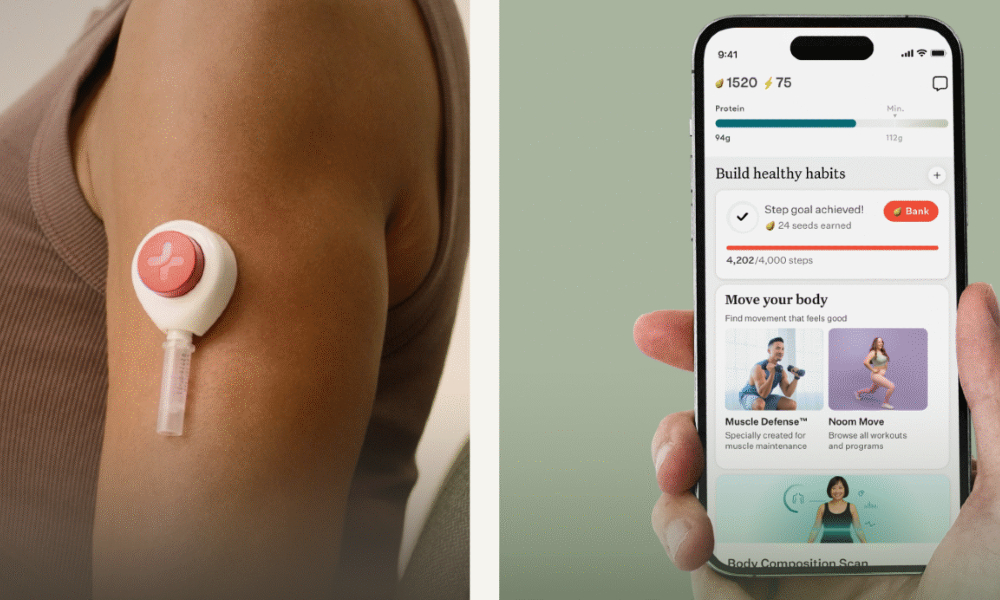
That growing curiosity is part of why Noom—the wellness platform best known for its psychology-based weight-loss program and GLP-1 prescriptions—has introduced Proactive Health Microdose GLP-1Rx. The brand calls it a “first-of-its-kind program that integrates GLP-1 medications as part of a larger preventive health program.” Its website notes that patients receive “personalized microdoses of GLP-1 medication, regular at-home biomarker testing and Noom’s digital healthy habits platform to empower people with data, insights, personalized action plans and the motivational support to take control of their long-term wellbeing.”
Ahead, we break down why microdosing is resonating right now, what problem Noom says it’s addressing and who may be eligible.
Why Microdosing—and Why Now?
According to Noom’s chief medical officer and double board-certified physician Jeffrey Egler, MD, the interest in microdosing is tied to a much bigger issue. “The problem we’re solving is that most Americans are living with suboptimal health and their blood biomarkers show it,” he says. “That eventually manifests as chronic disease. In the United States today, roughly three in four adults in midlife are living with at least one chronic health condition. One study called the prevalence of optimal metabolic health ‘alarmingly low,’ with only one in eight adults meeting the criteria. Another Harvard-led study found a 29% increase in coronary heart disease risk for each 0.5-point increase in HbA1c above 5.0%.”
Those numbers matter even when results technically fall within the “normal” range. “In practical terms,” continues Dr. Egler, “someone with an HbA1c of 5.6% may think they’re ‘in-range,’ but their cardiometabolic risk is already meaningfully elevated. Noom’s new program addresses these root causes proactively. By pairing healthy habits with microdosed medication, we aim to help members both understand and improve their biomarkers—and their long-term health—before disease develops.”
Who Qualifies for Noom’s Proactive Health Microdose GLP-1Rx?
Eligibility is broader than what’s typically associated with GLP-1 prescriptions. Noom’s Proactive Health Microdose GLP-1Rx is open to adults with a BMI of 21 or higher, a group the brand says represents “the vast majority of US adults.”
Getting started still involves medical oversight. Interested members complete an intake questionnaire, submit a body photo, verify their identity and connect with a licensed clinician, who determines whether a microdosed GLP-1 prescription is appropriate. If approved, members receive personalized dosing, at-home blood testing every four months and ongoing support through Noom’s coaching tools.
For those Noom considers qualified, the goal is improved metabolic health over time—measured through biomarkers such as HbA1c and cholesterol rather than short-term weight loss. The brand offers a preliminary quiz on its website, noting that pricing starts at $99 for an initial three-week subscription and four weeks of medication.