
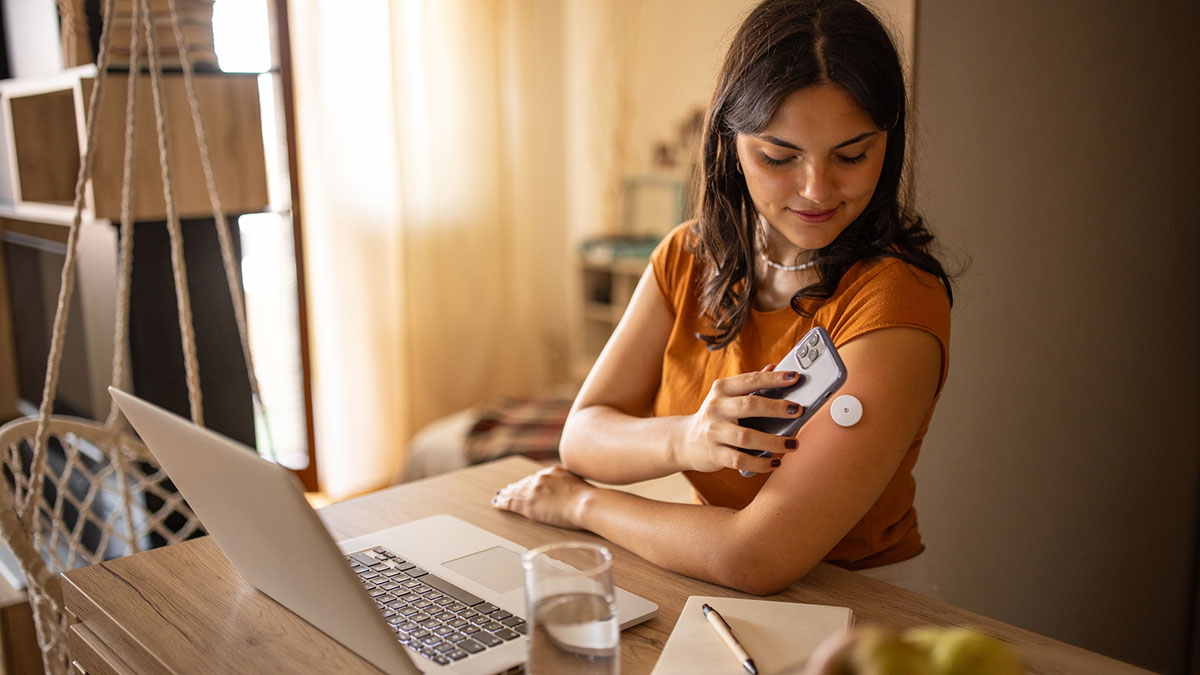
How CGMs work
A CGM is a medical device that monitors your glucose (blood sugar) level in real time. Unlike a traditional blood glucose monitor that requires a finger prick, a CGM attaches to your stomach or arm. It uses a small plastic tube to monitor your glucose levels from interstitial fluid (fluid between cells) just under your skin.
Who can use a CGM?
Anyone with diabetes can benefit from using a CGM, but especially those who:
- Have type 1 diabetes.
- Has type 2 diabetes and uses insulin.
- Test their blood sugar often.
- Have difficulty controlling their blood sugar levels.
CGMs are becoming more widely available for people with diabetes and prediabetes and even for people without either condition. Some people choose to use a CGM in the short or long term to improve their health, nutrition, or physical fitness goals.
How to use your CGM
Before applying the CGM, wash your hands and the sensor site with soap and water and allow them to dry completely. Lotion or moistened soap often makes it difficult for your CGM to stick to your skin. Insertion of the CGM may feel like a quick squeeze, like a finger prick, but most people don’t feel it once it’s in place.
CGMs should be replaced every 7 to 14 days. To prevent skin irritation, you can change where you place the sensor on your body. Be sure to follow the CGM manufacturer’s instructions.
Your CGM can also share results with your healthcare team. This allows for closer monitoring by your healthcare provider and more efficient medication management. For example, if you take insulin, constant feedback on your glucose levels from a CGM can help you make sure you’re taking the right dose. CGMs can also help you and your healthcare provider know how well all of your diabetes medications are working.
Finger sticks
Many people think that once they start using a CGM, they will never need to take fingersticks to monitor their blood sugar. However, glucose levels from interstitial fluid can be different from blood glucose levels. It’s still important to check your blood sugar with a finger stick once in a while to make sure your CGM is accurate. This is especially true if you are new to using a CGM or have recently been diagnosed with diabetes. Ask your health care professional how often you should do finger pricks.
Protecting your CGM
Most CGMs are waterproof and some are fully waterproof. You can use an additional adhesive patch over your CGM to protect it while you bathe or swim. Adhesive patches can also help secure your CGM in humid weather or if you bump into it frequently.
Certain medical procedures such as X-rays, CT scans, angiograms, and radiation therapy can damage a CGM. If you travel through airport security, your CGM will not trigger a metal detector, but it may be damaged from a full-body scan or if your bag is scanned. Be sure to let the TSA agent know if you are traveling with a CGM.
Understanding CGM results
The biggest advantage of using a CGM is that you can see your glucose level at any time without a finger prick. CGMs send data to a smartphone or other device to show your glucose levels. The results are automatically updated every few minutes and constantly change in response to your meals, physical activity and other daily routines. Many CGMs also send alerts if your blood sugar rises or falls rapidly.
Time within reach
In addition to real-time glucose levels, CGMs provide results in a graph with a moving line showing time in range (TIR). TIR is the percentage of the day that your glucose level is within your target range. For most people, this glucose target is between 70 and 180 mg/dL, and the target TIR is 70% of the time, about 17 hours a day. Individual goals may vary, so be sure to talk to your healthcare provider to understand your specific diabetes management goals.
Cost
Most private insurance plans, Medicare and Medicaid cover CGMs for people with type 1 diabetes with minimal monthly costs. CGMs are also typically covered for people with type 2 diabetes who take daily injections (like insulin), use an insulin pump, or have had severe low blood sugar. To qualify for insurance coverage, you may need a medical device prescription from your healthcare provider.
Without insurance coverage, CGMs can cost thousands of dollars a year.