
Try one of these tips every day for a month to help your family take a step-by-step approach to eating healthier.
- Make it fun for kids to try new fruits and vegetables. Have them choose a new fruit or vegetable at the grocery store each week. Plan together how to prepare it in a healthy way.
- Include whole grains in your family’s diet plan. When shopping for bread, rice, pasta, cereal, crackers and more, choose the whole grain options. Look for “whole grain” to be the first ingredient on the ingredient list and choose those products that contain 10% or more fibre Daily value per portion.
- Choose healthy “good” fats. Use non-tropical liquid vegetable oils such as canola, corn, olive, safflower, sesame and sunflower instead of butter and other solid fats to minimize saturated fat and avoid trans fat.
- Be a good role model. It’s hard to expect your kids to eat their vegetables if you don’t eat yours. Teach your children and show by example what healthy foods is and how much we should eat to keep our bodies healthy.
- Read Nutrition Facts labels. Look for foods that provide vitamins, minerals and dietary fiber. Limit sodium, added sugar, saturated fat and avoid trans fat.
- Look for the Heart-Check brand when shopping. Keep an eye on the American Heart Association’s trusted Heart check mark to make smarter food choices.
- Check the serving size on the Nutrition Fact labels. Serving size is not always the same portion size. Check the portion size and portions per container on food you buy. What may seem like a reasonable portion may be two or more portions.
- Cook more at home. When you cook, you have more control over the ingredients in your food and the amount you eat and serve. Plan to cook at home more often than eating out. Get started with our delicious, nutritious recipes.
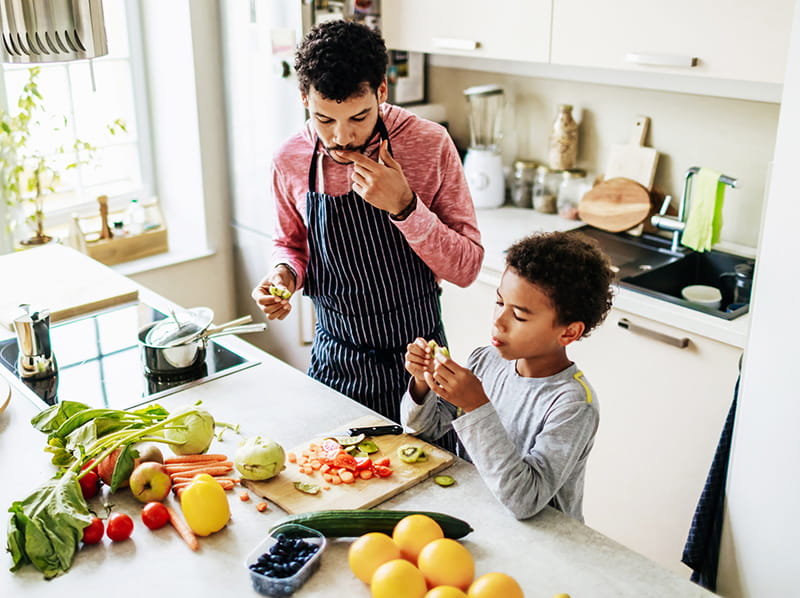
- Get your kids in the kitchen. They will be more excited about eating healthy foods once they have been involved. Give them age-appropriate tasks and keep a stool handy.
- Snack smart. Keep ready-to-eat fruits and vegetables on hand, such as celery and bell peppers and a bowl of grapes or cherries, in an easily accessible place in the refrigerator. Your family is likely to grab fruits and vegetables, especially for snacks, if they are readily available.
- Eat fish high in heart-healthy omega-3 fatty acids. Fatty fish, such as salmon, mackerel, trout and albacore tuna, are good choices. Plan to serve fish twice a week. Try these fish recipes.
- Enjoy a small handful of nuts or seeds. Look for unsalted nuts. Almonds, hazelnuts, peanuts, pecans, pistachios and walnuts are all good choices. Also stir them into plain fat-free/low-fat yoghurt or oatmeal or sprinkle them on salads.
- Choose fresh, canned or frozen vegetables and fruits. They are full of nutrients and dietary fiber. They are also naturally low in calories and sodium. Fresh, frozen and canned produce can all be healthy choices. For canned, choose the no added salt, reduced sodium and no added sugar options. For frozen, look for them without sauces or seasonings.
- Use fresh or dried herbs and salt-free spices. Fill your kitchen with herbs and spices, such as basil, parsley, cayenne, chili powder, cumin, curry, ginger, black pepper, crushed red pepper flakes, and a salt-free spice blend. Use these to flavor food instead of salt. Add a squeeze of fresh lemon or lime to add flavor as well.
- Pack your own packed lunch. Whether you’re going to the office or the kids are going to school, it’s a good idea to bring your lunch so everyone can make healthy choices. Try tuna or egg salad with fat-free/low-fat mayo on 100% whole grain bread with lettuce and tomato. Choose a salad with beans, nuts and fat-free/low-fat cheese for protein. Be creative and use leftovers too. For lunch, how about enjoying a slice of last night’s leftover meatloaf in a whole grain pita bread with chopped vegetables and a dollop of ketchup without added salt and sugar or tomato sauce without salt and sugar? Don’t forget to pack snacks including yogurt (plain fat/low fat), fruit, nuts/seeds and cut up vegetables.
- Cook vegetables in healthy ways. Different cooking methods will make the same vegetable taste slightly different. So if you don’t like steamed broccoli, for example, try roasting it. Roasting brings out the natural sweetness in many vegetables, such as cauliflower, Brussels sprouts, mushrooms and butternut squash. Try grilling zucchini, yellow squash and corn on the cob. Carrots, snow peas and asparagus are deliciously steamed.
- Replace sweetened beverages with unsweetened options. Enjoy sparkling water, unsweetened tea or sugar-free drinks instead of sugar-sweetened soda or tea. Add fruits, such as lemon, lime or berries, to drinks for extra flavor.
- Enjoy fruit for dessert. Try ours homemade dessert recipesmany of which contain fruit to add fiber and nutrients while cutting back on added sugar and saturated fat.
- Use healthy cooking techniques. Instead of frying food, which can add a lot of extra calories, use healthier cooking methods such as air frying, slow cooking, roasting, grillingbaking or steaming.
- Grow your own garden. Children are more likely to try something they have grown themselves.
- Schedule time each week to plan healthy meals. Keep your recipes, shopping list and coupons organized to make planning and budgeting easier. The more you plan, the less likely you will be tempted to opt for fast food or make other unhealthy choices.
- Use frozen or canned fish and poultry for a quick and easy meal. Compare sodium among products and choose the options with no added salt or low sodium canned in water. Throw these proteins in a stir or salad.
- Serve a meat-free meal at least once a week. Think vegetable lasagna or a portabella mushroom burger. Nuts and beans can add protein, fiber and other nutrients to a meal.
- Be an advocate for healthier children. Insist on good food choices at schools and children’s institutions. Contact public officials and make your voice heard. Become an American Heart Association Heart driven advocate.
- Eat healthy on a budget. Try these budget-friendly recipes. Many fruits, vegetables and legumes (beans and peas) cost less than $1 per portion.
- Beware of added sugar. They add extra calories but no useful nutrients. Sugar-sweetened beverages and soft drinks are the biggest source of added sugar for most of us. Save sugary desserts and snacks for special occasions.
- Funny food faces. Make silly faces on your child’s plate with a variety of fruits and vegetables. This can make eating more exciting for your child. Encourage them to create their own faces using different colors and shapes.
- Color your plate when you eat out. Kiddie crayons on the table aren’t the only way to add color to your meal. Look for colorful fruits and vegetables you can add as sides or substitute for other ingredients in your dish.
- Eat together as a family. Sit down to a meal together at least once a week with family, friends or neighbours. It can reduce stress, boost self-esteem and make everyone feel more connected.
- Make healthy food choices easy for kids. Place fruits, vegetables, nuts and whole grain options on a lower shelf in the refrigerator where children can easily reach them.