
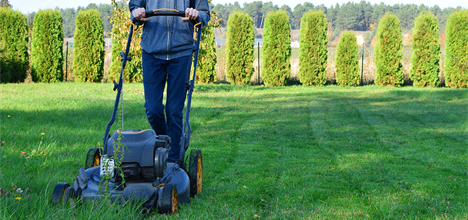
Electric lawnmowers are one of the most dangerous tools in the home. Each year, more than 5,000 children are treated in emergency rooms for injuries caused by lawnmowers. Older children and teenagers are most often injured while mowing lawns such as chores or as a way to make money.
Damage from lawnmowers
Lawnmowers damagesthat doctors see include deep wounds, loss of fingers and toes, broken and dislocated bones, burns, injuries to the eye and other body parts. Some injuries are very serious. Both users of lawnmowers and bystanders can be injured.
The good news is that most lawnmower-related injuries can be prevented with some simple precautions. Keep reading for important safety tips.
When are children old enough to mow the lawn?
Before learning to mow the lawn, your child should demonstrate the maturity, good judgment, strength and coordination required for the job. In general, the American Academy of Pediatrics recommends that children should be at least
It is important to teach your child how to use a lawnmower. Before you allow your child to mow the lawn alone, take the time to show them how to do the job safely. Keep an eye on your child’s work until you are sure they can complete the task on their own.
Before mowing:
-
Make sure younger children are indoors or at a safe distance, well away from the area you plan to mow. -
Try using a mower with a control that stops the blade and forward motion if the handle is released.
-
Read the lawnmower’s operating instructions and the instructions on the lawnmower.
-
Check the conditions outside:
-
Do not mow in bad weather, such as during a thunderstorm.
-
Do not mow wet grass.
-
Do not mow without enough daylight.
- Clear the mowing area of objects such as twigs, rocks and toys that can be picked up and thrown by the mower blades.
-
Make sure guards, shields, grass catcher and other types of safety equipment are properly positioned on the mower.
-
Use a grass clipping collection bag or a plate to cover the opening where grass is released.
-
Make sure blade adjustments (to adjust wheel height or remove debris) are performed by an adult, with the mower turned off and the spark plug removed or disconnected.
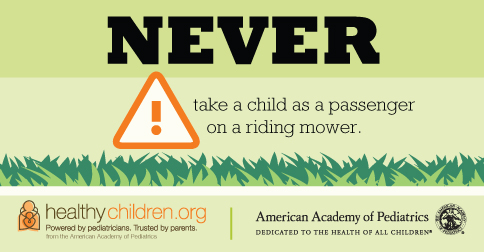
If your lawnmower is electric, use a ground fault interrupter to prevent electric shock.
During mowing:
-
Have everyone using a lawnmower wear hearing and eye protection and sturdy shoes that cover the toes (not sandals or sneakers)
-
Be careful when approaching corners, trees, tall grass, or anything else that may block your view.
-
If the mower hits an object, stop, turn off the mower and inspect the mower. If it is damaged, it must not be used until it has been repaired.
-
Do not pull the lawnmower backwards or mow backwards unless absolutely necessary and watch carefully for children behind you when mowing backwards.
-
Be extra careful when mowing a slope:
-
When using a lawn mower, mow across slopes, not up and down, to avoid slipping under the mower and into the blades.
-
With a riding mower, mow up and down slopes, not across, to avoid tipping over.
-
Remember that lawn trimmers can also throw objects at high speed.
-
Be aware of where children are and do not allow them near the area where you are working. Children tend to be attracted to lawnmowers in use.
Stop the engine and allow it to cool before adding fuel
Start and refuel lawn mowers outdoors, not in a garage or shed. Always switch off the lawnmower and wait for the blades to stop completely before:
-
unblocking the outlet chute or crossing gravel paths, roads or other areas
-
removing the grass collector
-
release of the expiry tax
-
step away from the lawnmower
Watch this video for more information:
More information
The information on this site should not be used as a substitute for medical care and advice from your pediatrician. There may be variations in treatment that your pediatrician may recommend based on individual facts and circumstances.