
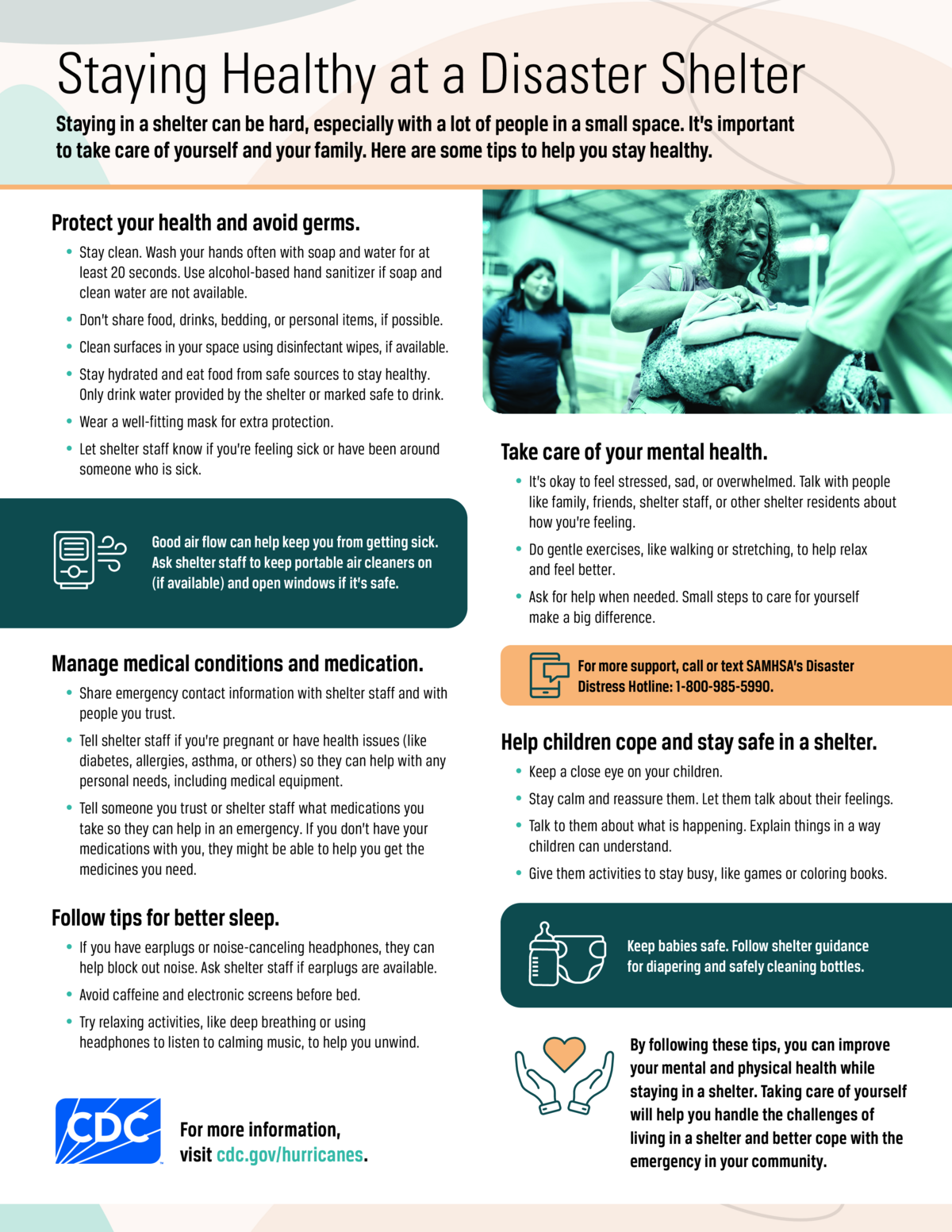

- Staying in a shelter can be difficult, especially with many people in a small space. It is important to take care of yourself and your family.
- Taking care of yourself will help you deal with the challenges of living in a shelter and better cope with the emergency in your community.
Steps to take
Protect your health and avoid germs.
- Keep yourself clean. Wash your hands frequently with soap and water for at least 20 seconds. Use alcohol-based hand sanitizer if soap and clean water are not available.
- Do not share food, drinks, bedding or personal belongings if possible.
- Clean surfaces in your room with disinfectant wipes if available.
- Stay hydrated and eat food from safe sources to stay healthy. Drink only water provided by the shelter or labeled safe to drink.
- Wear a well-fitting mask for added protection.
- Tell the shelter staff if you feel sick or have been around someone who is sick.
Manage medical conditions and medications.
- Share emergency contact information with shelter staff and with people you trust.
- Tell shelter staff if you are pregnant or have health problems (such as diabetes, allergies, asthma or others) so they can help with personal needs, including medical equipment.
- Tell someone you trust or shelter staff what medications you are taking so they can help in an emergency. If you don’t have your medicine with you, they may be able to help you get the medicine you need.
Follow tips for better sleep.
- If you have earplugs or noise-canceling headphones, they can help block out noise. Ask shelter staff if earplugs are available.
- Avoid caffeine and electronic screens before bed.
- Try relaxing activities, such as deep breathing or using headphones to listen to soothing music, to help you relax.
Take care of your mental health.
- It’s okay to feel stressed, sad, or overwhelmed. Talk to people like family, friends, shelter staff or other shelter residents about how you are feeling.
- Do gentle exercises, such as walking or stretching, to help relax and feel better.
- Ask for help when needed. Small steps to take care of yourself make a big difference.
Help children cope and stay safe in the shelter.
- Keep a close eye on your children.
- Stay calm and reassure them. Let them talk about their feelings.
- Talk to them about what is happening. Explain things in a way children can understand.
- Give them activities to keep them busy, such as games or coloring books.
Content Source: