
Last reviewed on 30 May 2024
Fatty liver disease (FLD) is a condition in which normal liver tissue is replaced by more than 5-6 percent fat. In FLD, the accumulation of fat can cause inflammation, cell death, and scarring—a condition called steatohepatitis. Untreated, steatohepatitis can lead to liver fibrosis, which causes decreased blood flow throughout the liver and a buildup of scar tissue. Without treatment, liver fibrosis can lead to cirrhosis, liver failure and liver cancer.
Your doctor will perform a physical exam and may order blood tests to evaluate your liver function. You may also undergo abdominal ultrasound, abdominal CT, body MRI, ultrasound elastography, magnetic resonance elastography, or liver biopsy to help diagnose your condition. Treatment of FLD and/or liver fibrosis depends on the underlying cause and is typically aimed at preventing, slowing or reversing the progression of liver fibrosis. Options include lifestyle changes, medications, and cholesterol and diabetes treatment.
What is fatty liver disease and liver fibrosis?
One of the many causes of liver disease is the build-up of too much fat in the organ, called steatosis. The liver normally contains some fat, but more than 5-6 percent fat is abnormal. The class of liver diseases in which the liver becomes fatty (or steatotic) is called Fatty Liver Disease (FLD).
There are two main causes of FLD:
- alcoholic fatty liver disease (AFLD), which occurs as a result of consuming excessive amounts of alcohol.
- nonalcoholic fatty liver disease (NAFLD), which occurs as a result of abnormal metabolism. It is associated with obesity, high cholesterol and diabetes. NAFLD is the most common liver disease in developed countries, including the United States.
Other causes of FLD include: viral hepatitis, certain medications including steroids and chemotherapy, and pregnancy.
FLD can progress to a condition called steatohepatitis, when the accumulation of fat in the liver causes inflammation, cell death and scarring. Long-term steatohepatitis leads to liver fibrosis as scar tissue builds up and replaces healthy liver tissue.
Liver fibrosis results in decreased blood flow throughout the liver. As healthy liver tissue is lost, the liver also loses its ability to function. If untreated, liver fibrosis can progress to cirrhosis of the liverliver failure and liver cancer.
Unfortunately, many patients with FLD and liver fibrosis are unaware that they have liver disease because the symptoms are often vague, such as mild fatigue or abdominal discomfort.
As liver disease progresses over time, patients may begin to experience:
- appetite and weight loss
- weakness
- nausea
- yellowing of the skin and eyes (jaundice)
- fluid retention and swelling in the legs and abdomen
- confusion and difficulty concentrating
How are fatty liver disease and liver fibrosis diagnosed and evaluated?
Your doctor will begin by asking you about your medical history and symptoms. You must also undergo a physical examination.
To diagnose FLD and liver fibrosis, your doctor may order blood tests to evaluate liver function, including tests to assess the level of the liver enzymes ALT and AST, which can be high when the liver is fatty.
Your doctor may also order imaging tests of the liver, such as:
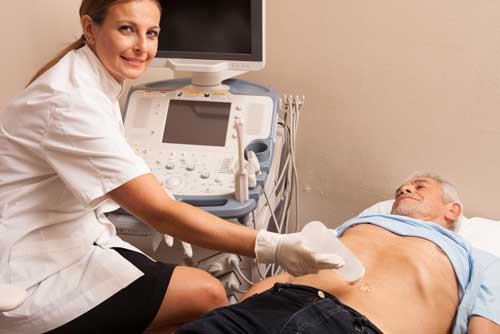
- Abdominal ultrasoundwhich uses sound waves to produce images to evaluate the size and shape of the liver as well as blood flow through the liver. On ultrasound images, steatotic livers look lighter than normal livers, and cirrhosis (advanced fibrosis) looks lumpy and shrunken.
- Computed tomography (CT) of the abdomen and pelvis that combine special X-ray equipment with sophisticated computers to produce multiple pictures or images of the inside of the body. On CT, steatotic livers appear darker than normal livers. Cirrhosis looks lumpy and shrunken.
- Magnetic Resonance Imaging (MRI) uses a magnetic field and radio waves to produce detailed images of the liver. MRI is the most sensitive imaging test for steatosis, very accurate even in mild steatosis. When a special technique is used, MRI can calculate the percentage of fat in the liver. More than 5-6% fat in the liver is considered abnormal.
- Ultrasound elastography is a special ultrasound technique to test for liver fibrosis. The movement of the liver caused by the ultrasound wave is measured in the center of the liver, and its stiffness (or elasticity) is calculated. Fibrotic livers are stiffer and move to a greater extent compared to normal livers.
- MR elastography (MRE) is a special MRI technique to test for liver fibrosis. The movement of fine vibrational waves in the liver is imaged to create a visual map or elastogram showing the stiffness (or elasticity) across the liver. Both ultrasound and MR elastography can detect increased stiffness in the liver caused by liver fibrosis earlier than other imaging tests and can eliminate the need for an invasive liver biopsy.
- Liver biopsy is an image-guided procedure that removes a small sample of liver tissue using a needle. The sample is then examined under a microscope for signs of steatosis, inflammation and damage, and fibrosis.
How are fatty liver diseases and liver fibrosis treated?
Treatment for FLD and liver fibrosis varies depending on the cause. Doctors typically recommend treatment aimed at preventing or delaying the progression of fibrosis. With treatment, the progression of liver disease can be slowed and can be reversed.
For example, therapies for NAFLD may include:
- dietary changes
- anti-inflammatory drugs and drugs against insulin resistance
- management of cholesterol and diabetes
- exercise and weight loss
- elimination of alcohol use