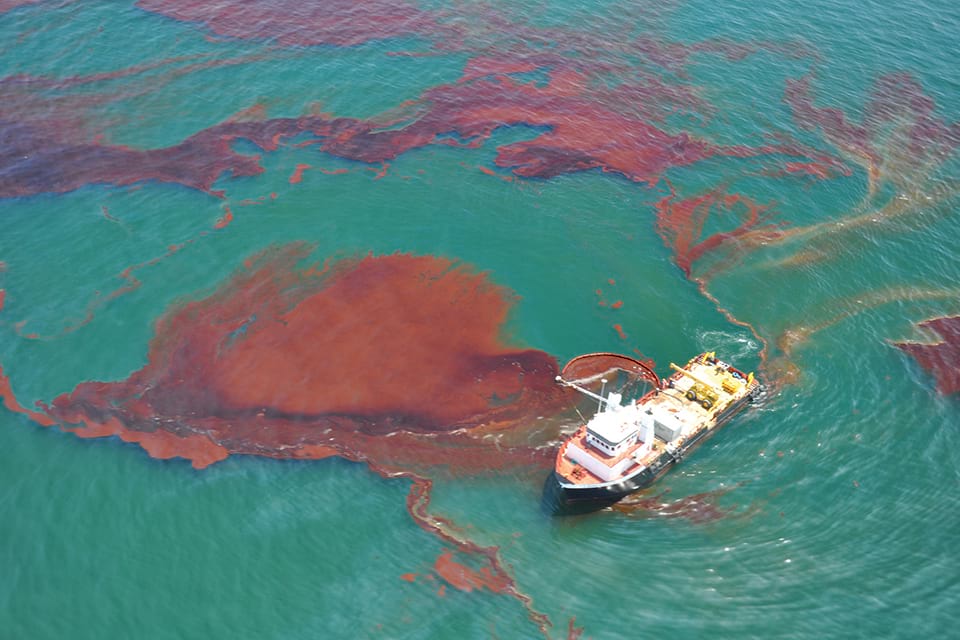
Oil spills can cause the closure of recreational and commercial areas (Credit: NOAA)
In addition to the lives that can be lost during an oil spill (like the explosion that led to Deepwater Horizon spills), spills can affect the livelihoods of communities dependent on commercial or entertainment fishing, tourism or recreation.
Leisure activities affected by the spill in the Gulf States affected by Deepwater Horizon included boating, fishing and beach experiences such as swimming, surfing and wildlife viewing. Some beaches and recreational fishing were closed due to oil spills and cleanup activities. A group of federal and state agencies, known as Trusteeswere responsible for assessing the impact of the spill. The Trustees assessed that the spill affected recreational activities from April 2010 to November 2011. During that time, Deepwater Horizon spill caused the public to lose more than 16 million user days of boating, fishing and beach experiences. Total recreational use damages from the spill through November 2011 were estimated at $693.2 million.
Deepwater Horizon also destroyed the commercial fishing industry. The US Bureau of Ocean Energy Management estimated that the spill caused a loss of between $7.5 million and $141.1 million in revenue for combine harvesters across the Gulf in the eight months following the oil spill. Many people depend on Gulf fisheries for their income, from harvesters who catch seafood to restaurants that serve it. Across the seafood industry, Deepwater Horizon cost up to $952.9 million in total sales, up to $309.8 million in revenue and a whopping 9,315 jobs from May to December 2010.
These financial consequences can also lead to health and emotional consequences. After the destruction of Deepwater Horizon spill, the population of Gulf Coast communities experienced increases in stress and depression. Residents worried about the economy, their lifestyles and the stability of their communities. All these factors play a role in affecting their health.

Oil spills can cause stress or depression in people who live or work in affected areas (Credit: Florida Sea Grant/Anna Hinkeldey) View and print this infographic and see description below.
Native communities—including Native American tribes, Alaska Natives, and Pacific Islanders—as well as other cultural groups have ties to natural resources that go beyond recreational or commercial activities.
The Exxon Valdez oil spill contaminated the critically important ecosystem in Prince William Sound, Alaska, with 11 million gallons of crude oil. Native peoples account for nearly one-fifth of Alaska’s total population. Alaska’s native peoples and cultures span the entire state, intertwined with the unique land and waters that surround it, including Prince William Sound. This area is home to several of Alaska’s tribal groups, including the Aleuts, Athapaskans, Eskimos, Eyaks, and Tlingits. It offers many natural and cultural resources that these groups seek for both sustenance and to sustain their way of life.
The Exxon Valdez oil spills significantly damaged these natural and cultural resources. A study by the U.S. Department of the Interior found that it took a long time to restore fisheries and harvests in Prince William Sound. Wild foods harvested in the villages of Tatitlek and Chenega Bay dropped from more than 600 pounds per person before the spill to 225 pounds in 1989 and 150 pounds in 1990. Years later, harvests still hadn’t reached pre-spill levels.
Infographic description
This graphic shows a simple map of Louisiana, Mississippi, Alabama, and Florida with text describing the mental health impacts of the Deepwater Horizon oil spill on communities in each of these states.
- IN Louisianathe oil spill disrupted work, school and social life for some coastal residents, resulting in symptoms of anxiety, depression and post-traumatic stress.
- IN Mississippisome coastal residents experienced worsening economic situations, social relationships and health problems, including more psychologically unhealthy days compared to residents in the rest of the state.
- IN Alabamasome coastal residents felt stress, anxiety and depression and had more psychologically unhealthy days compared to residents in the rest of the state. Residents were also concerned about air quality, safe seafood and their income or financial future.
- IN Floridasome coastal residents felt anxious and depressed, especially if they experienced loss of income from the spill. These feelings were observed even in areas where the oil did not reach the shore.
Below the card there are three icons:
- An off-shore oil rig labeled “Oil and gas”.
- An airplane and a suitcase labeled “Tourism.”
- And a fishing vessel marked “Fishing”.
These icons are accompanied by text reading, “Regionallysome residents of the coastal counties reported reduced income, lost jobs, and a disruption in their work or family life, resulting in psychological distress for themselves and their children. People who relied on the jobs associated with the Gulf were more likely to suffer from negative mental health symptoms after the oil spill. Of these industries, negative impacts were most common in fishing communities.”
Key takeaway: The Deepwater Horizon oil spill affected communities in many different ways, but all reported increased mental health.