

What is recurrent pericarditis?
Recurrent pericarditis is when you develop pericarditis for the second time after no symptoms for at least four weeks. This return of inflammation is also known as a “flare up”.
Pericarditis is inflammation of the pericardium, a sac-like organ with two thin layers of tissue that surrounds the heart. The pericardium holds the heart in place, protects it from infection and prevents it from filling with too much blood. It also cushions the heart from outside pressure. A small amount of fluid keeps the layers apart and reduces the friction between them when the heart beats. However, in some people with this condition, these tissues become swollen and irritated. This can cause sharp chest pain and can lead to fluid accumulation around the heart causing discomfort. In most cases, pericarditis is mild and gets better on its own without treatment.
Among those treated for acute pericarditis, 15% to 30%, or nearly 40,000 people in the United States, may experience recurrent pericarditis if not treated with the drug colchicine. About 5% of people who sought treatment in emergency departments for chest pain had acute pericarditis.
Other types of pericarditis include:
- Acute pericarditis lasts less than four to six weeks.
- Persistent pericarditis symptoms last more than four to six weeks but less than three months despite therapy.
- Chronic pericarditis lasts for more than three months.
See the fact sheet on recurrent pericarditis (PDF)
What are the symptoms of recurrent pericarditis?
Symptoms of pericarditis can be the same no matter how many times you’ve had it, but most people experience a combination of these common symptoms:
- Chest pain is almost always present. It can feel like a sharp, stabbing pain that radiates to the arm, neck, shoulder, back or stomach. Some people mistake the pain for a heart attack. The pain gets worse when you cough, take deep breaths or lie down. The pain can be improved by sitting up and leaning forward.
- Back, neck or shoulder pain radiating from chest pain
- Shortness of breath or difficulty breathing
- Palpitations or a faster than normal heartbeat
- Low-grade fever, chills or sweating
- Dry cough
- Swollen abdomen, legs or feet
- Symptoms of low blood pressure, such as lightheadedness, dizziness, or fainting
- Weakness or tiredness
Be sure to tell your doctor if you have had any of these symptoms. Note that many people with pericarditis report being misdiagnosed with acid reflux or heartburn. Women in particular report being misdiagnosed with panic attacks, stress or anxiety.
See Recurrent Pericarditis Symptoms Sheet (PDF)
What causes recurrent pericarditis?
The cause of pericarditis is idiopathic or unknown in most patients, but potential causes of a first episode of pericarditis include:
Viral diseases, such as herpes, influenza, adenovirus, enterovirus or Epstein Barr virus can also cause recurrent pericarditis.
Other potential causes include:
- Autoimmune conditions such as lupus, scleroderma and rheumatoid arthritis
- Complications from a heart attack or heart surgery
- Health problems, such as kidney failure or cancer
- Bacterial, fungal and parasitic infections (most common in people with a weakened immune system)
- Radiation to the chest
- Chest trauma
- Certain medicines, such as phenytoin (an anti-seizure medicine) and procainamide (prescribed for irregular heartbeats)
If a pericarditis flare-up occurs again, it is often because the initial episode (or flare-up) did not completely resolve, or because the body has had an auto-inflammatory response.
See the sheet on the causes of recurrent pericarditis (PDF)
How is recurrent pericarditis diagnosed?
Depending on your age and medical conditions, a primary care physician, cardiologist, rheumatologist, or infectious disease specialist may treat you.
If your doctor thinks you may have pericarditis, they will listen to your heart for the murmurs that often occur in people with the condition. One or more of the following tests may be used to confirm the diagnosis:
- Blood test: May reveal increases in white blood cell count and other signs of inflammation.
- EKG (electrocardiogram): Measures your heart’s electrical activity, and certain results may indicate pericarditis.
- X-ray of the chest: Takes pictures of the heart, lungs and blood vessels inside the chest. An X-ray can show if the heart is enlarged due to excess fluid in the pericardium. It can also reveal signs of infection, sarcoidosis, or malignancies that can cause pericarditis.
- Echocardiogram: Sound waves create images of your heart’s size, shape and how it works. This may reveal fluid accumulation in the pericardium.
- Heart CT (computed tomography): A type of X-ray that takes a clear, detailed picture of your heart. It can help identify inflammation, thickening or calcification of the pericardium, as well as fluid retention.
- Heart MR (magnetic resonance imaging): Also called CMR, this test uses magnets and radio waves to create detailed pictures of your heart and surrounding tissue. This can reveal changes in the pericardium.
Tell your doctor if you have been diagnosed with pericarditis or have had symptoms before, and if you have recently been sick with a viral infection, such as the flu, herpes or a stomach virus. Also, share if you have any autoimmune conditions, such as lupus, scleroderma, or rheumatoid arthritis.
Recurrent pericarditis can be difficult to diagnose because it is relatively rare and patients can go months between episodes. In patients receiving NSAID therapy—whether as ongoing treatment for a previous episode of pericarditis or for another condition (eg, arthritis)—symptoms of a recurrent flare may be partially masked. Even if you were diagnosed in a hospital emergency room or urgent care center, be sure to tell your primary care physician or healthcare professional about any incident. They can arrange for you to be treated for possible recurrent pericarditis.
See Recurrent Pericarditis Diagnosis Sheet (PDF)
How is recurrent pericarditis treated?
Management of this condition focuses on reducing inflammation, preventing future recurrences and minimizing complications. Treatment typically involves a combination of medication and lifestyle changes tailored to each patient’s needs.
Recurrent pericarditis is usually treated with the anti-inflammatory drug colchicine and aspirin and non-steroidal anti-inflammatory drugs (NSAIDS). You may also be advised to limit or restrict physical activity to help your body respond to the medication and prevent pericarditis from returning.
When NSAIDs and colchicine do not lead to complete resolution, low to moderate doses of corticosteroids such as prednisone may also be prescribed. Because steroids have been associated with a higher risk of relapse, they are typically used in people who cannot tolerate NSAIDs or colchicine or in those who are pregnant or have conditions such as autoimmune disease. Interleukin 1 blockers, which neutralize pro-inflammatory molecules, may also be prescribed to patients who do not respond to medication to achieve better symptom control.
Your doctor may perform a pericardiocentesis, where excess fluid is drained from the pericardium. Or as a final result, the pericardium may be removed in whole or in part. This is called a pericardiectomy.
Ask your healthcare professional how long you can expect to be on any medication and any potential side effects you may experience. If you need financial help, your pharmacist can tell you about possible coupons or prescription assistance programs.
See the sheet on treatment of recurrent pericarditis (PDF)
Get support
It is normal to feel scared, overwhelmed or confused after being diagnosed with recurrent pericarditis. Getting support from people experiencing the same journey can help you cope. Our online community of patients, survivors and relatives is here for you and your loved ones to share your experiences, get support from others and ask questions Find encouragement and join our support network.
Outlook
For most people, recurrent pericarditis can be treated safely at home and rarely leads to death. But it can cause potentially life-threatening complications, such as loss of elasticity of the pericardium (constrictive pericarditis) and a build-up of fluid in the pericardium (cardiac tamponade). Some people with pericarditis may also have pericardial thickening.
Seek medical attention if you have persistent symptoms of pericarditis.
If you feel chest pain of any kind, call 911 immediately because it could be a sign of a heart attack. If you have recurrent pericarditis, be sure to talk to your doctor about your symptoms and treatment options.
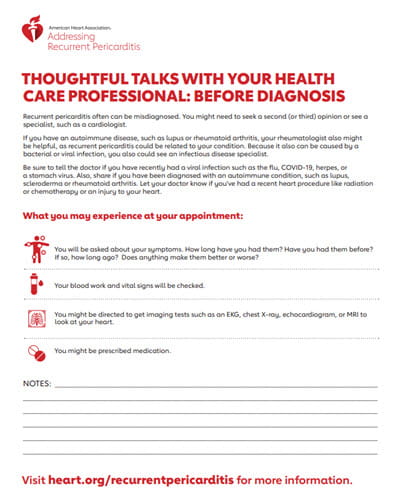
See the discussion guide: Before and after diagnosis (PDF)
Remember to speak for yourself. Because pericarditis is relatively rare, your healthcare provider may not be familiar with the symptoms or treatment options. Do not hesitate to get a second opinion or to consult a specialist. Many healthcare professionals support and encourage patients to get second and even third opinions to ensure the best care.