

Screening for abdominal aortic aneurysm
Talk to your healthcare provider about screening for abdominal aortic aneurysm.
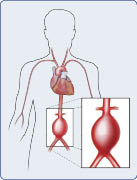
What is an abdominal aortic aneurysm?
An aneurysm (“AN-yuh-rizm”) is a bulge in a weakened blood vessel. An aneurysm can lead to serious problems.
Your heart pumps blood to the lower part of your body through a large blood vessel called the “abdominal aorta”. If an aneurysm develops here, it is called an abdominal aortic aneurysm.
Is an abdominal aortic aneurysm serious?
- Most people who have aneurysms have no symptoms.
- A large aneurysm can burst. This is very serious and can even result in death.
- If you have a large aneurysm, you may need surgery. Finding large aneurysms with screening before they rupture can make surgery and recovery easier.
Who should be screened?
Men between the ages of 65 and 75 who have EVER smoked cigarettes should be screened. Other people do not benefit as much from screening.
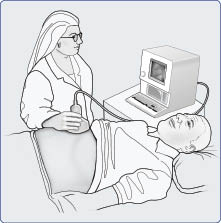
How does the screening take place?
The screening is painless and quick and is usually carried out during a visit to the X-ray clinic. An ultrasound is used to create an image of your abdominal aorta using sound waves. The width of your abdominal aorta is then measured to determine if there is a bulge.
What happens after screening?
Your next step depends on whether the test finds a bulge in the aorta. If you have a small or medium-sized bulge, your provider may recommend “watchful waiting,” which means checking your aneurysm periodically.

Big bump
(more than 5.4 cm)
You and your provider will discuss what to do now. You may need surgery.

Medium dent
(4.0-5.4 cm)
You and your provider will discuss what to do now. You will probably be checked again in 6 months.

Small dent
(3.0-3.9 cm)
You should be checked again in 2-3 years.

Normal (no bulge)
Congratulations! You do not need to be screened again.
What can I do to prevent abdominal aortic aneurysm?
Smoking increases your risk of having an aneurysm. If you smoke now is the most important step you can take STOP smoking.
Ask your doctor for help to quit.
Here are some questions to ask your provider:
- Should I have this test?
- How would I benefit from this test?
- Would I be harmed by this test?
- How do I prepare for this test?
For more information, please contact your local VA Medical Center or Health Clinic.