
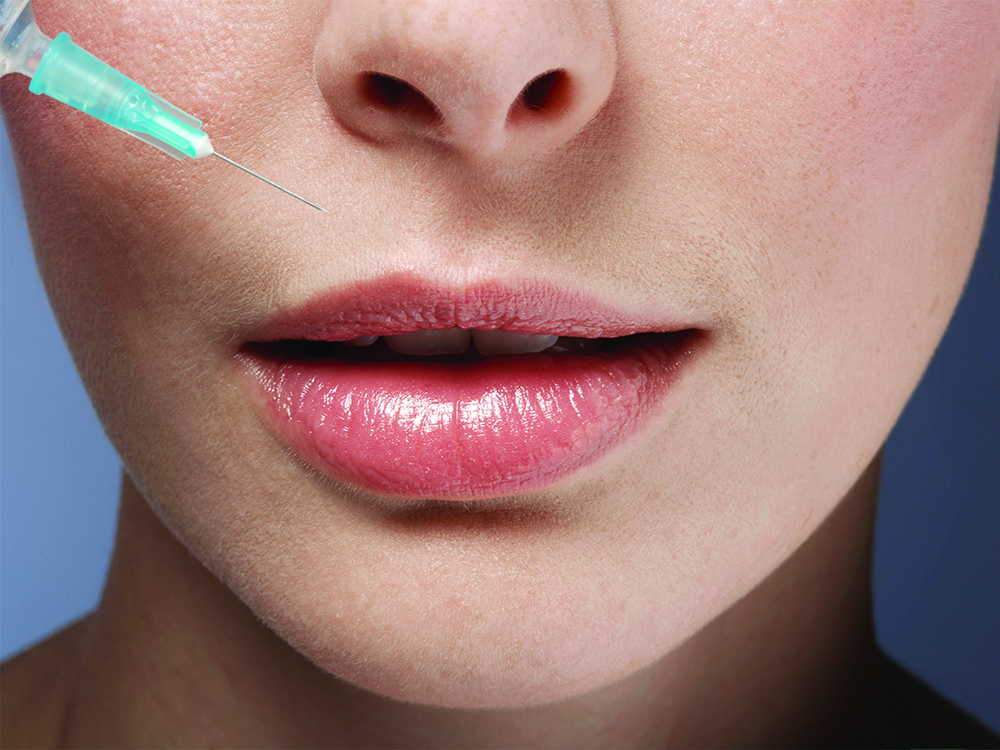
For years, the questions I heard about filler were predictable: how long it lasts, whether it hurts and how to avoid looking overfilled. Lately, the conversation has shifted. Almost every friend who asks me about facial balancing brings up biostimulatory fillers such as Sculptra and Radiesse, often calling them “natural” fillers. Imagine my surprise when the most common question became whether these injectables are even real fillers or something entirely different. They’ve been part of the aesthetic toolkit for more than a decade, yet they’re suddenly having a renaissance, positioned as the more “natural” option that builds slowly and subtly over time.
The truth isn’t as mysterious as the marketing makes it seem. These injectables behave differently from hyaluronic acid, but they still live firmly in the filler family. They add volume, contour, require meticulous technique and, unlike HA fillers, cannot be dissolved. What they offer is not an escape hatch from filler, but a different path to the same goals.
Here, dermatologists explain what biostimulatory fillers actually are, why their reputation has shifted and how to understand the “natural” narrative with a little more accuracy.
Blurring the Lines
Much of the confusion comes from how these products work. Patients hear “collagen stimulation” and assume a completely separate category. Lake Charles, LA dermatologist Kerri Davis-Fontenot, MD says this happens constantly. “Biostimulatory injectables like Sculptra and Radiesse absolutely are fillers; they just work differently,” she explains. “They are injectable volumizing agents placed in the same planes as traditional fillers, and they still restore volume, improve contours and treat volume loss. They just do it on a delayed collagen-building timeline.”
That delay doesn’t make them any less technical. “Just like traditional fillers, they require deep knowledge of anatomy, proper technique and strict safety protocols,” she adds. “So although they behave a little differently, biostimulatory products are still very much part of the filler family—just with a regenerative twist.”
Restoring Balance
As more people experience facial changes from GLP-1 medications, these injectables have gained new relevance. Vienna, VA dermatologist Brenda Dintiman, MD sees this shift firsthand. “Biostimulatory fillers like Radiesse, calcium hydroxylapatite filler, are mixed and diluted to create hyperdilute Radiesse, allowing treatment of the neck, chest, above the knees, upper arms and face to stimulate collagen and elastin,” she says. “They can be very helpful in patients who have had weight loss from GLP-1 meds.”
Even though they don’t deliver the instant gel-like effect of hyaluronic acid, early subtle fullness is still possible. “You can see some natural volume enhancement within two weeks, then the quality and fullness will evolve over two to three months,” she explains. And while patients often call them “natural,” the reality is more specific: the filler itself isn’t natural, but the collagen your body builds is.
Public Perception
Biostimulatory fillers didn’t surge in popularity by accident. Their moment arrived just as people were growing skeptical of hyaluronic acid filler, says New York dermatologist Erin Kil, MD. “The misconception is likely the result of marketing during the season of filler fatigue,” she explains. “There was a negative connotation associated with filler since many people were getting overfilled. As a result, these other types of fillers distanced themselves from hyaluronic acid fillers by emphasizing their biostimulatory effects and their stimulation of collagen and elastin production. However, both products restore volume loss.”
The “Non-Filler” Filler
Some injectors lean into the duality when explaining these products to patients. Shreveport dermatologist Skylar Souyoul, MD often frames Sculptra in a way that helps set expectations. “I refer to Sculptra as a ‘non-filler’ filler because it is not a traditional filler like hyaluronic acid, but it still provides some volume while improving skin quality.”
Still, she stresses that a new language doesn’t erase old realities. “It is important that patients know that Sculptra and Radiesse are injections and carry similar risks as traditional fillers, including granulomas, nodules, infection and vascular occlusion. In addition, neither of these is reversible, so it is very important that they are done by an expert core aesthetic physician, such as a dermatologist or plastic surgeon.”
The “Natural” Appeal
The appeal of biostimulatory fillers often comes from the idea that they’re low-maintenance and inherently safe because they work with your own collagen. Newton, MA dermatologist Papri Sarkar, MD urges patients to see the bigger picture. “Although Sculptra and Radiesse are biostimulatory fillers that work by harnessing the body’s natural collagen-making machinery, even on the initial injection day, patients do see some improvement,” she says. “Once the body is able to make collagen you just see more of it.”
The word “natural” doesn’t cancel out risk. “Like traditional hyaluronic acid fillers, there are still similar side effects possible and reversing some side effects is more difficult,” she explains. Overdoing it is also a real concern. “The important thing to note is that if you do too much filler or too much biostimulatory filler, you will look too full, like a ‘pillow face.’ So do not go to someone who looks like that or makes people look like that.”
For patients who want results that blend seamlessly, a measured approach matters. “Use a little bit in the appropriate areas and the appropriate skin layers and supplement as needed with other products in small amounts,” she advises. When used thoughtfully, she says the aesthetic can be remarkably soft. “The big benefit of these products is that by making your body make endogenous collagen, the results look very natural if done properly.”