A visit to the emergency room is not fun for anyone. But older people face challenges that can make a tough situation worse.
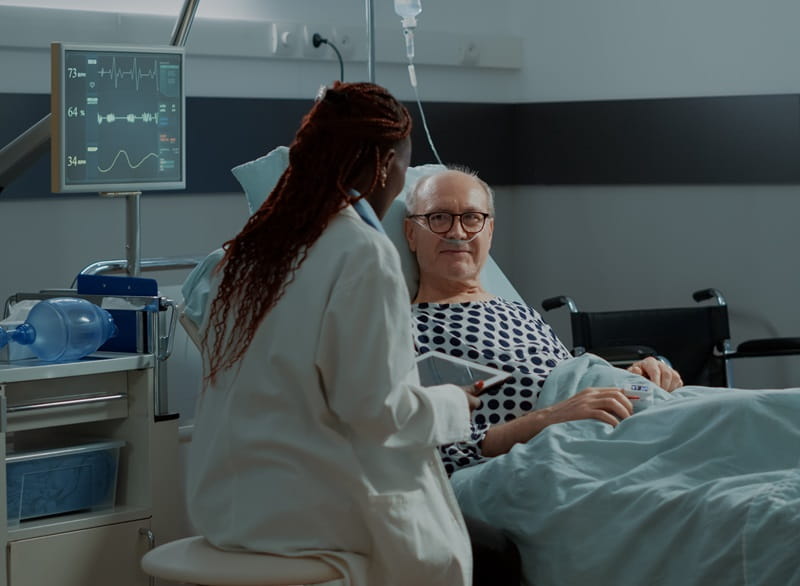
The lights, noise and endless activity can be confusing and even trigger delirium. Slippery floors pose a risk of falling, as do hospital beds that can be difficult to get in and out of.
However, some emergency departments are taking steps to improve the experience for older adults. These geriatric, or age-friendly, approaches can make a difference, experts say.
“In the past, we always treated everyone in the ED the same, regardless of age,” said Dr. Liz Goldberg, associate professor of emergency medicine and geriatrics at the University of Colorado School of Medicine in Aurora. Now there is more focus on doing things differently for older adults “because they have different needs and different diagnoses, and they require that special attention.”
Dr. Ula Hwang, medical director of geriatric emergency medicine at NYU Langone Health in New York City, said that back in 2007, she had trouble finding an academic journal to publish a paper she co-authored that spelled out the concept of a geriatric emergency department.
The need for age-friendly care is clear, Hwang said. Older adults visit emergency departments nearly 33 million times a year, or 21% of all such visits, according to the Centers for Disease Control and Prevention data from 2022.
The American College of Emergency Physicians began certifying geriatric emergency departments in 2018. Today, more than 500 hospitals in the United States have achieved some level of certification. Even more may have made age-friendly changes without seeking full certification, said Goldberg, the immediate past president of the Academy for Geriatric Emergency Medicine.
“It’s grown very quickly,” she said.
Who needs age-friendly emergency care?
In an emergency, Hwang said, the need for quick, specialized care will be the same for all ages. A heart attack with blocked or narrowed areas of a coronary artery, for example, can be treated in a catheterization lab or with anticoagulant therapy that can quickly restore blood flow to the heart, while stroke patients will be assessed for the type of stroke and the appropriate treatment.
It’s the more ambiguous emergencies where age-related differences come into play, said Hwang, who is also a professor of emergency medicine and population health at the NYU Grossman School of Medicine. “Those patients are the ones who often get a fairly long and extensive workup while they’re in the emergency room,” and that’s where age-friendly care can make a difference from the start.
Goldberg said most emergency departments are busy and chronically overcrowded.
“The emergency department is a very fast-paced, loud environment,” she said, where a lack of beds means patients can spend hours or days in a hallway that was never intended to be used as a treatment room. Lights are kept bright all the time and the constant activity can be stressful and disorienting or worse.
“You really don’t want an 85-year-old or older patient lingering and stranded in the emergency room for hours and days on end,” Hwang said. “It’s been shown that if you’re an older adult and you go into the emergency room overnight, you’re at a higher risk of developing delirium, even potentially having an in-hospital mortality.”
An age-friendly emergency department helps prevent such problems both through protocols and changes to the physical space.
Physically, adaptations can include non-slip flooring and an abundance of handrails and assistive devices such as walkers to prevent falls, Goldberg said.
Clear signs can prevent people from getting lost, and large print forms can ensure that vision problems don’t get in the way of understanding instructions.
Age-friendly protocols cover other issues, Hwang said. Many are built around four themes – finding what matters most to patients; evaluation of medication; “mentation” or cognitive problems; and mobility. These “4Ms” are the basis for age-friendly care models.
Emphasis on evaluation
Care can begin with screening the patient for dementia or other cognitive problems, Hwang said. “If they have cognitive impairment, they may not even follow what’s going on” and struggle to follow directions.
An evaluation would look for root causes of a problem. If a younger person comes in after a fall, standard care may require treating the injury and moving on. But with older patients, Hwang said, “we also have to think, ‘Well, what caused these things?’
A symptom that is ambiguous, such as dizziness or trouble walking, could be caused by something serious, such as a stroke, Hwang said. Or a medication problem could be behind a dip in blood pressure that caused someone to lose their balance and fall. So a review of a patient’s prescriptions is also a foundation for age-friendly care.
Older adults are more likely than younger people to be on multiple medications with confusing regimens, Goldberg said. At the same time, kidney and liver function declines with age. Given the role of these organs in processing drugs, standard doses may need to be different for older people.
“We see it a lot,” she said, “where well-meaning clinicians put patients on drugs that are great if you’re 40 years old and very bubbly — and not so great if you’re 80.”
Age-friendly care also requires the healthcare staff to work with patients to understand what they really want from a visit to the emergency room.
A younger person, Hwang said, is likely to show up in the emergency room with a new problem. They may want a full evaluation and can expect to be checked into the hospital with the long-term expectation of recovery.
Older adults, she said, may tend to need help with existing problems and not be interested in spending days being analyzed for a problem they don’t know will go away.
A person who knows they have congestive heart failure, for example, may experience a flare-up of symptoms. But “it’s not like we’re going to cure this condition,” Hwang said. The patient may simply want relief from pain or shortness of breath so they can return home.
In other cases, Goldberg said, a patient may prefer hospice to extensive medical care. “It actually takes quite a bit of training to not do what doctors do best and just power through all the possible interventions we could deliver to a patient who is very, very sick.” A geriatric emergency department can provide social workers and other experts to help relatives.
Delirium in the emergency department has been associated with accelerated cognitive decline and prolonged hospital stays for older adults. People with dementia are at greater risk of delirium. Age-friendly protocols emphasize preventing that through steps like keeping the person hydrated and limiting equipment, such as monitors and catheters, attached to them, Goldberg said.
Age-friendly changes to an emergency department could also allow caregivers to sit with patients or move them to quieter areas where the lighting is dimmed at night, Goldberg said, and provide display clocks to help them stay oriented.
How does an age-friendly emergency department help?
Studies have shown several benefits of age-friendly emergency care.
“From the patient’s perspective, there is a lot of increased patient satisfaction,” Hwang said, because health care professionals take the time to listen to their needs.
Geriatric-oriented care can cut down on avoidable hospitalizations, Hwang said. And it can save money. A study, led by Hwang and published in JAMA Network Open in 2021 showed that an age-friendly emergency department reduced the total cost of care for Medicare beneficiaries by more than $3,200 during the subsequent 60 days after their first emergency visit.
It can also keep older patients healthier. A study Goldberg led, published in Annals of Emergency Medicine in 2020 found that a group of patients who received consultation from a pharmacist and a physiotherapist in the emergency room to prevent falls were half as likely to require a return visit and a third as likely to have a visit due to a fall within six months, compared to a group who did not receive such help.
Interventions that prevent delirium can also prevent falls during the hospital stay, Goldberg said.
The number of age-friendly emergency departments has been increasing, and they can be found nationwide. But only about 1 in 10 emergency departments have geriatric certification from American College of Emergency Physicians. Many are urban teaching hospitals. But rural areas are disproportionately older, and “there’s definitely a push to try to get more geriatric emergency departments in rural areas,” Hwang said.
In many cases, someone who needs emergency care won’t have a choice about where to go, Goldberg said. And an age-friendly ward may not even be the first choice, depending on the emergency. If you care for a person who e.g. have symptoms of a stroke, you’d be better off calling 911 so they can be taken to a battle center – and the one closest to you may not have geriatric accreditation.
But for someone in a big city who has options, Goldberg said, it could be worthwhile to find out ahead of time which ones are either fully ACEP-certified or recognized by the nonprofit Institute for Health Improvement.
Hwang hopes the idea will continue to spread. “Maybe 10 years ago we were the innovative concept,” which has grown into a popular model. But there is certainly room for more widespread implementation, she said. “It’s a much needed thing.”