People with functional gastrointestinal (GI) disorders can have a range of symptoms ranging from painless diarrhea or constipation to pain associated with diarrhea and/or constipation (commonly called irritable bowel syndrome). There is another, less common condition of abdominal pain which is chronic or recurrent; it is not associated with changes in bowel pattern or with another medical condition. This condition is called centrally mediated abdominal pain syndrome (CAPS) – formerly known as functional abdominal pain syndrome (FAPS).
CAPS is a functional GI disorder. There are no abnormal X-rays or laboratory findings to explain the pain. It occurs due to altered sensitivity to nerve impulses in the gut and brain and is not associated with altered gut motility. CAPS is characterized by persistent or frequent abdominal pain that is often severe. It has little or no relation to events such as eating, defecation or menstruation.
For people with CAPS, the pain can be so all-consuming that it becomes the main focus of their lives. It not only affects the quality of life, but it also has a large financial impact.
Pathophysiology – Understanding why people get CAPS
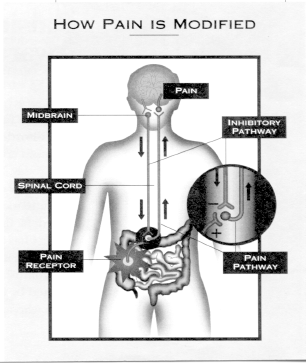
To understand the basis of centrally mediated abdominal pain syndrome, it is helpful to understand how the body experiences pain. Nerve impulses travel from the stomach to the spinal cord and then to different areas of the brain.
There are many different areas of the brain involved in the sensation of abdominal pain. One of these connected areas deals with the location and intensity of pain, while another connected area deals with memories or emotions. Because of this interconnection, pain perception can be influenced by emotions or life experiences.
While symptoms of CAPS can occur for no apparent reason, they can also occur after infections or events that stimulate the gut, and also after traumatic life events such as the death of a loved one, a divorce, or a history of abuse. In times of added stress, symptoms may worsen.
Repeated damage to the stomach can cause nerve receptors to become oversensitive. For example, if someone has had multiple abdominal surgeries or an infection, a later painful event may be experienced as more painful than before.
Even normal abdominal activity can be experienced as painful. It’s like turning up the volume on a stereo receiver. This condition is called visceral hypersensitivity (increased sensitivity of the intestines).
Although the brain also has an ability to “turn down” the pain signals from the gastrointestinal tract with CAPS, this ability is reduced so that even small amounts of intestinal disturbance can be amplified to produce severe pain (central hypersensitivity). So these individuals have an altered “brain-gut axis” where there is a failure of the brain to regulate even normal gut nerve activity, leading to increased pain.
Understanding how the brain can alter the experience of pain (for better or for worse) is critical to beginning any treatment. When someone feels anxious or depressed, or focuses attention on the pain, it is experienced as more severe. The use of relaxation training or other techniques can direct attention away from the pain.
If a person has had a bad encounter with pain in the past, the fear of having the pain again can actually make the pain worse next time. If a person takes steps to feel in control of the pain, the symptoms will improve. In addition, the amount of support a person receives from family, friends, and other sources can affect how a person responds to pain.
Treatment strategies for Functional Abdominal Pain Syndrome
Given what we currently know about CAPS, the aim of treatment is to help you gain control of your symptoms and improve daily functioning, rather than to completely eliminate symptoms, which is usually not possible.
One way to start is to keep a journal to record symptom flare-ups and identify possible triggers (emotional and situational). This kind of information can be used by you or your doctor to help develop better strategies to control symptoms.
The brain not only affects how you feel pain, it is also able to block pain. Think of the basketball player who sprains his ankle during a game and continues to play without awareness of pain. Then, when the game ends, he collapses on the floor, unable to walk. He was able to block out the pain by focusing his attention on the game.
As nerve impulses travel up from the stomach to the spinal cord, some of them go through a sort of “gate” controlled by nerve impulses coming down from the brain. These impulses from the brain can block or inhibit pain signals going from the stomach to the brain by “closing” the gate. Alternatively, they can increase the signals to the brain by opening the gate.
Because the brain has such a strong influence on the sensation of pain, psychological treatments can relieve symptoms of CAPS by sending signals that close the gate. Various techniques include relaxation, imagery, hypnosis and cognitive behavioral therapy.
Treatments – The Mind-Body Connection
- Symptom Diaries – Helps you see which events or feelings make symptoms worse.
- Stress management (ie relaxation techniques, meditation) – Teaches you how to focus your attention on something other than the pain.
- Hypnosis – Helps you focus your attention away from the pain. Positive suggestions can change the way you think or react.
- Cognitive Behavioral Therapy – Teaches you how to change unhelpful thoughts, perceptions, and behaviors to control symptoms.
Medicines can also be used to treat CAPS. For persistent or severe stomach pain, your doctor may prescribe an antidepressant. It is important to understand that these medications are not only used to treat people who have depression, but also act as pain relievers (central analgesics) to treat CAPS and many other painful conditions.
Antidepressant medications can help stimulate the brain to increase the signals that block pain transmission from the stomach to the brain. It may take several weeks before a difference is noticed.
Treatments – Antidepressant medication
- Antidepressants act as pain relievers.
- These medications stimulate the brain to send signals and close the pain control gate in the stomach.
- Antidepressants can take several weeks to work, so you should not stop taking them until your doctor tells you to.
- Side effects are possible, but usually disappear after a few days.
Some people will experience side effects from antidepressant medications. Usually, the side effects will disappear after a few days, so it is important to continue with the medication until the treatment benefit is achieved.
The tricyclic antidepressants (TCAs) can cause dry mouth and drowsiness. Another group of antidepressants are called selective serotonin-norepinephrine reuptake inhibitors (SNRIs). These can cause side effects such as nausea. Both of these classes of antidepressants are useful in treating pain.
Finally, it is becoming increasingly common to use combinations of treatments such as a bowel medication and an antidepressant or two types of medication to affect the brain’s pain control or a behavioral treatment such as cognitive behavioral therapy with an antidepressant. These combinations can improve pain benefit while keeping side effects to a minimum.
The patient-doctor partnership
It is important that you work with a doctor who shows empathy towards you and an understanding of the symptoms of CAPS. It is a disorder where the treatment requires the participation of both you and your doctor.
Treatments for CAPS are most effective when the patient and doctor work as a team, each having a role. Your doctor is responsible for informing you about CAPS. He or she should answer your questions and give you an understanding of what your symptoms are about and what your treatment options are.
You must express your views about your treatment goals, work with your doctor to develop the treatment plan, and work toward putting the plan into action. If you follow the treatment plan closely, you and your doctor will be better able to track your results. This will allow you to achieve the best possible relief from stomach pain.
Source
Adapted from Chronic functional abdominal pain syndrome IFFGD Publication #141 by Douglas A. Drossman, MD, Drossman Gastroenterology, Drossman Center for Education and Practice of Biopsychosocial Care, Chapel Hill, NC.