
About CKD, diabetes and heart disease
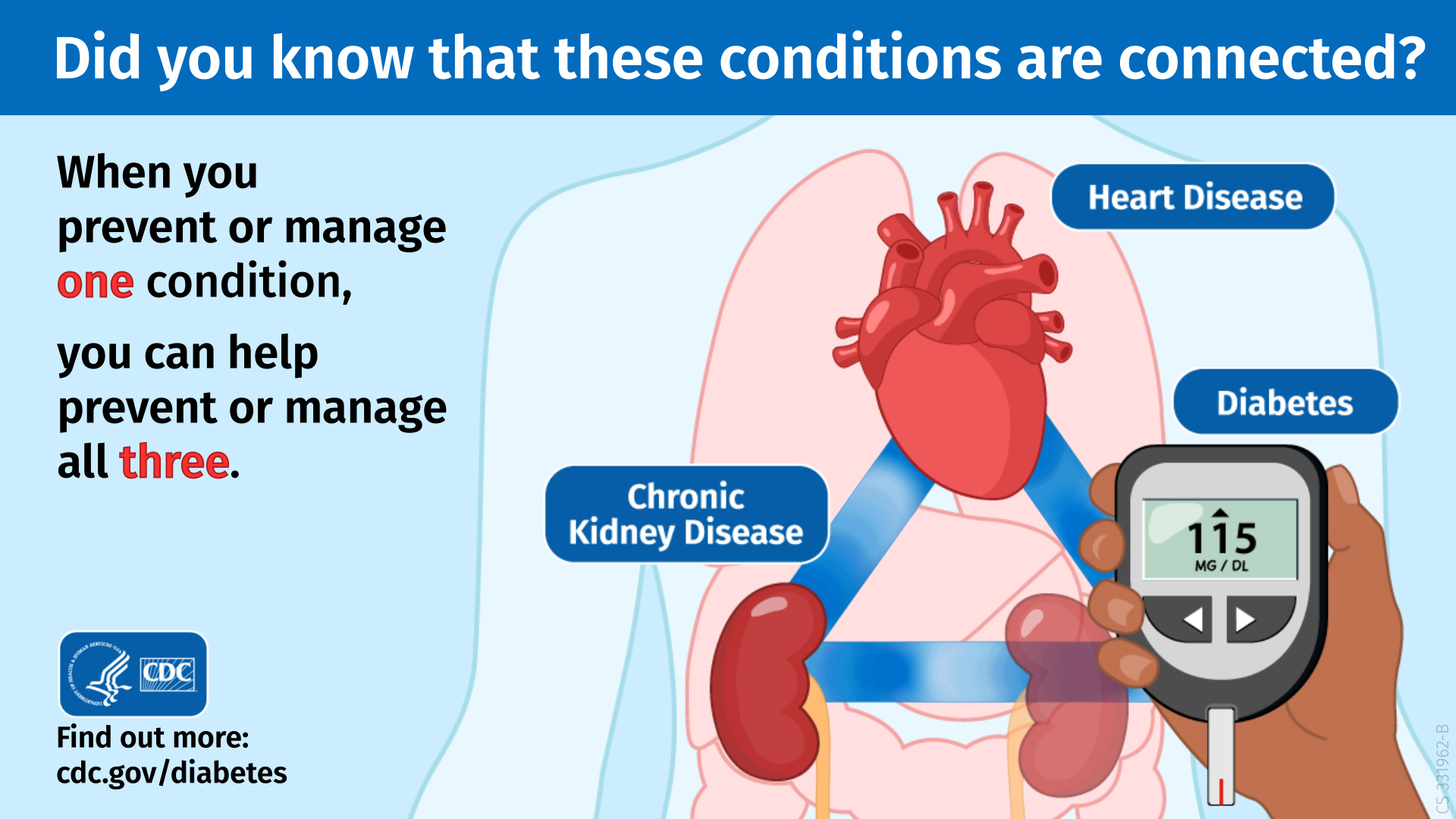
The relationship between CKD, diabetes and heart disease is an example of how our organs are connected. When one organ is not working properly, it can put stress on other organs, causing them to stop working properly as well.
Your body uses a hormone called insulin to move sugar from the blood into your body’s cells for energy. If anyone has diabetesthey either don’t make enough insulin or can’t use the insulin well.
If anyone has CKDtheir kidneys don’t filter toxins and waste from their blood as well as they should.
Heart disease refers to several types of heart disease. The most common condition, coronary artery disease, leads to changes in blood flow to the heart. This can cause a heart attack.
Make the connection
So how do these three relationships relate? Risk factors for each condition are similar and include:
- High blood sugar.
- High blood pressure.
- Family history.
- Obesity.
- Unhealthy diet.
- Physical inactivity.
High blood sugar can slowly damage the kidneys. Over time, they can stop filtering blood as well as they should, leading to CKD. About 1 in 3 American adults with diabetes have CKD.
When the kidneys don’t work well, it puts a strain on the heart. When someone has CKD, their heart has to pump harder to get blood to the kidneys. This can lead to heart disease, the leading cause of death in the United States. Change in blood pressure is also a CKD complication that can lead to heart disease.
Tips for preventing or dealing with all three
The good news is that you can manage or prevent CKD, diabetes and heart disease all at once. These five tips can help you get started:
Get active
Being active can help prevent or manage CKD, diabetes and heart disease. Find an activity you like, start small and get going!
Choose healthy foods and drinks
This is an important way to give your body the fuel it needs to function properly. Adding more fruits and vegetables to your plate can also help you maintain a healthy weight. This is a great way to prevent or manage CKD, diabetes and heart disease.
Stop smoking
Quitting is one of the best things you can do for your health. It will help you prevent CKD, type 2 diabetes and heart disease. It also helps improve any of these conditions if you have them. You don’t have to do it alone! Visit I’m ready to stop.
Find out your risk for prediabetes
Know where you stand by taking this 1-minute prediabetes risk test. If your risk is high, talk to your doctor about taking steps to prevent or delay type 2 diabetes. The Lifestyle Modification Program through CDCs National Diabetes Prevention Program can help you build the healthy habits you need to succeed.
Get your annual flu vaccination
People with chronic illnesses are more likely to have health complications if they get the flu. These complications can worsen an existing condition and can even be fatal.
Protect your heart if you have CKD
Over time, CKD often gets worse and can lead to kidney failure. People with kidney failure will need regular dialysis (a treatment that filters the blood) or a kidney transplant to survive.
Heart disease is the most frequent cause of death for a person on dialysis. When your kidneys are not working properly, the heart has to work harder to circulate the blood. This can lead to high blood pressure and possibly heart disease.
Tips to protect your heart and kidneys:
Choose foods that are healthiest for your heart and kidneys. Ask your doctor for a referral to a dietitian to understand what foods and drinks are best for you. Learn more about dialysis and healthy eating.
Get regular physical activity to help lower your blood pressure and improve your heart health. And remember that moving doesn’t have to be strenuous anymore. Some good ways to get active are gardening, yoga or a brisk walk around the block. Ask your doctor about which activities are best for you and if there are any you should avoid.
Manage your weight and blood sugar by changing your diet and activity routine. For extra help, you can work with a dietician to create a diet plan that works for you and your kidneys.