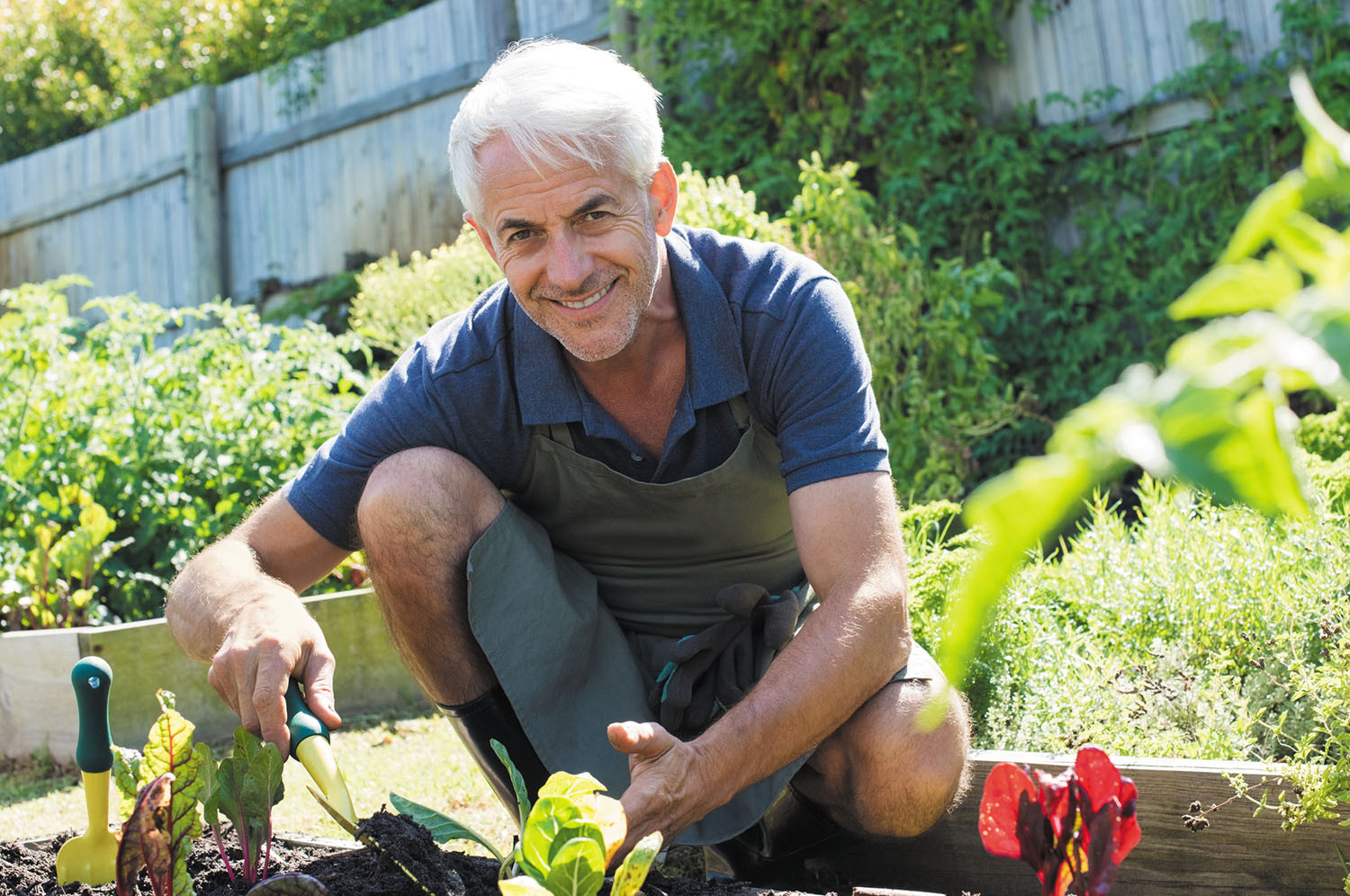
All older adults can benefit from functional fitness exercises—those that focus on the muscles needed for basic everyday actions, such as squatting, bending, reaching, and twisting.
“As we age, the ability to safely and effectively perform simple movements can help older adults stay active, reduce injuries and maintain independent living,” says Shawn Pedicini, a physical therapist with the Harvard-affiliated Spaulding Rehabilitation Network. “Focusing more on functional fitness is one way to achieve these goals.”
The big three
An all-around exercise routine that targets the major muscle groups is ideal for improving functional fitness. Still, you should add specific exercises that mimic basic movements as well.
Although there are many movements involved in functional fitness, the ones older adults should master are getting up and down from the ground or sitting, bending down and lifting objects, and carrying heavy or bulky objects. Here are three functional fitness exercises that address these skills. Add them to your regular workout or perform them together as a single routine.
To stand up against falling downFunctional fitness can improve balance and coordination and reduce the risk of falling. A study published online June 18, 2021 by Archives for public health found that adults aged 65 and older who performed best on functional fitness tests, such as grip strength, sit-to-stand, and single-leg stance, had a lower risk of falling compared to those who did not perform well on the tests. |
Up and down: Stationary split squat
The stationary split squat targets the quadriceps muscles (on the front of the thighs), gluteals (in the buttocks), and hamstrings (on the back of the thighs). The exercise helps you perform activities such as getting out of a chair or car, going up and down stairs, and kneeling and getting up off the ground, as when gardening. “Because of the position of your feet, it also provides a good challenge for your balance,” says Pedicini.
Starting position: Step forward with your left leg as if performing a lunge. Keep the heel of your right foot raised. (Hold onto the back of a chair for stability if needed.)
Movement: Keeping your torso straight, slowly lower your right leg until your knee hits the floor. Then push back to the lunge position. (You can place a pillow on the floor to cushion the throbbing knee.) Do five to 10 reps, then switch legs and repeat to complete a set. Perform two to three sets.
Alternative: Perform a half squat: Stand with your feet shoulder-width apart and your arms at your sides. Slowly bend your knees, lowering your buttocks about eight inches as if you were sitting back in a chair. Hold for a few seconds and then return to the starting position. Complete eight to 12 repetitions for one set, working up to three sets.
Bending and lifting: Kettlebell high pull
This exercise improves your ability to squat and reach objects on the ground. It also increases your tensile strength, helping you lift heavy objects, such as full laundry baskets or bags of potting soil.
Starting position: Stand with your feet slightly wider than shoulder-width apart and your toes pointing slightly out to the sides. Hold a kettlebell with both hands down in front of you. (You can also use a dumbbell by holding it at both ends.)
Movement: Bend your knees and lower into a squat. Hold on a moment. Bend your elbows out to the sides in one fluid motion and pull the kettlebell or dumbbell up to about chest height as you stand up. Hold again. This completes one rep. Return to the starting position and do eight to 12 reps for one set. Perform one to three sets. For more of a challenge, hold the kettlebell or dumbbell in only one hand and do the pulls with one arm at a time.
Alternative: Place the kettlebell or dumbbell on a chair so you start lifting at a higher level. You can also perform the pull without squatting.
Carry: Peasant walk
This strengthens your core and glutes and improves grip strength so you can carry objects with better control.
Starting position: Stand tall and hold a dumbbell or kettlebell in each hand with your arms at your sides like you would carry buckets of water.
Movement: Walk a distance of about 20 feet, back and forth, three to five times, resting as needed. Maintain good posture with head up and shoulders back.
Alternative: Hold the dumbbell or kettlebell in only one hand and walk the same distance in one direction. (Be sure not to lean to the side as you walk.) Switch the weight to the other hand and walk back to complete a walk.
Image: © Ridofranz/Getty Images