
Age, family genetics and gender make it nearly impossible for older adults to avoid becoming a chronic disease statistic. According to research published in 202593% of adults age 65 and older have at least one condition, while 79% have two or more.1 You probably have a parent or grandparent dealing with a condition right now, or maybe you’re managing one yourself.
And obesitywhich affects about 40% of adults 65 and older,1 can increase your risk of conditions such as heart disease, type 2 diabetes and certain cancers.2
With these kinds of odds, you might wonder if there’s anything you can do to prevent a chronic medical condition from developing or make managing an existing one easier. The answer is yes.
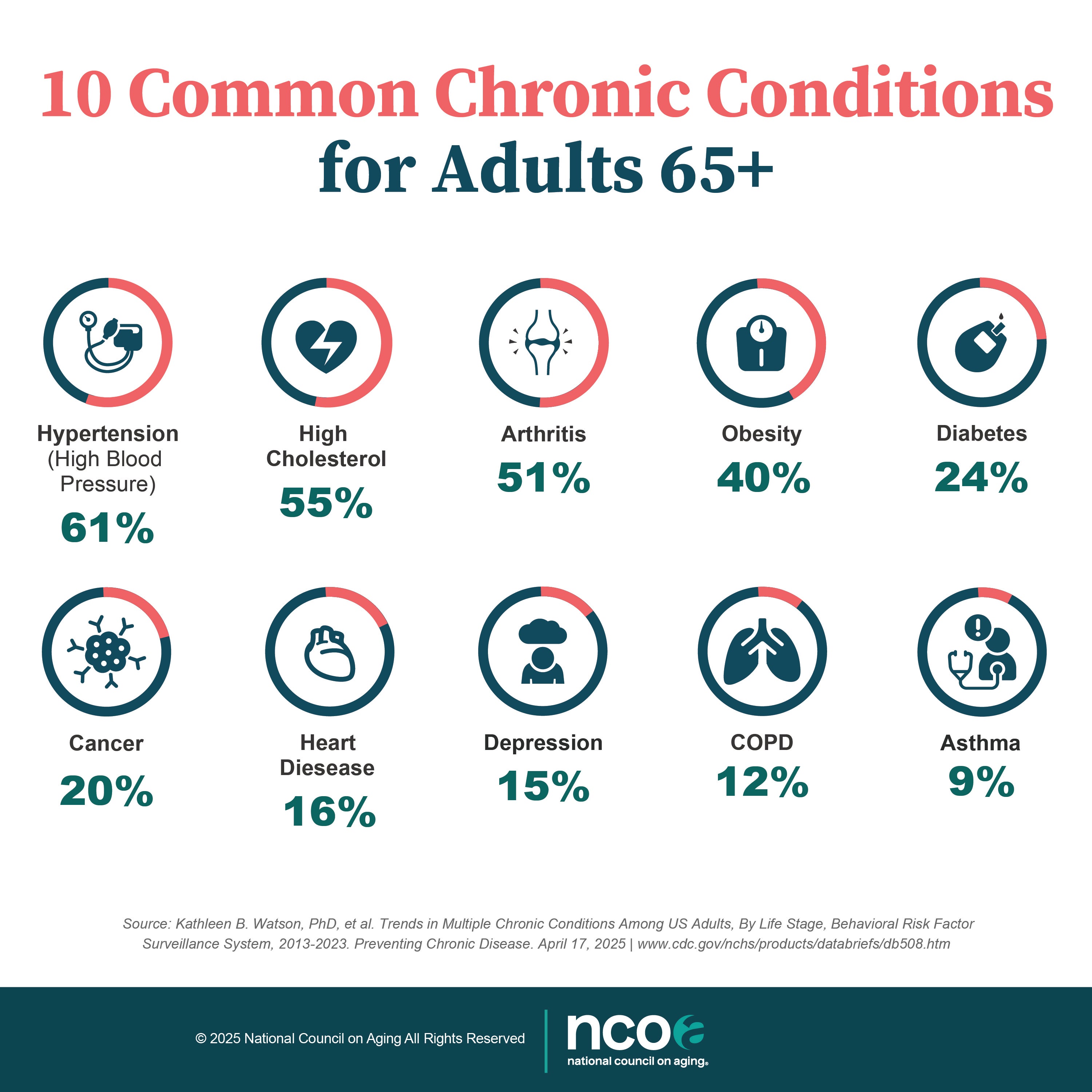
Here are the 10 most common chronic conditions among adults 65+,1 and what you should know about each.
Number 10: Asthma
An estimated 9% of adults 65+ have asthma, which causes swelling and tightening of the airways in the lungs. Common symptoms are shortness of breath, coughing, chest tightness, wheezing and difficulty exercising.
Among older adults, it is common for asthma to go undiagnosed because the symptoms can be mistaken for other problems such as heart problems or COPD, according to the American Academy of Allergy, Asthma and Immunology.3 Their advice for older adults with asthma includes:
- Stop smoking or vaping
- Get appropriate vaccines
- Avoid known asthma triggers
Number 9: COPD
About 12% of older adults 65+ have chronic obstructive pulmonary disease (COPD), which includes two main conditions: emphysema and chronic bronchitis. COPD makes it difficult to breathe and causes shortness of breath, coughing and chest tightness.
Steps you can take to manage COPD include:
- The best way to prevent COPD – or slow its progression – is to quit or avoid smoking. Also try to avoid passive smoking, chemical fumes and dust, which can irritate your lungs.
- If you already have COPD, complete the treatments prescribed by your doctor and get flu and pneumonia vaccines as recommended by your doctorand continue to stay active.
Number 8: Depression
15% of older adults have depression-a treatable medical condition that is not a normal part of aging. Depression causes persistent feelings of sadness, pessimism, hopelessness, fatigue, difficulty making decisions, changes in appetite, loss of interest in activities, and more.
Steps you can take to help with depression include:
- Manage stress levels. Reach out to family and friends during tough times and consider regular meditation.
- Eat a healthy diet. What you put in your body can affect your mood, so focus on foods that are high in nutrients and promote the release of endorphins and the “feel good” chemicals, and limit consumption of things like alcohol, caffeine, artificial sweeteners and highly processed foods.
- Be active. Exercise has a number of physical and psychological benefitsincluding improving your mood through the release of endorphins and other “feel good” brain chemicals, boosting confidence and self-esteem through achieving goals and improving your physical appearance, and increasing socialization through interactions in gyms and group classes.
- Talk to your doctor. If you have experienced any of the warning signs of depression, talk to your doctor and ask about your treatment options. Antidepressant medication or psychotherapy may be right for you.
If you are in serious emotional distress, one of the first things you should do is tell someone about it – such as a trusted friend or family member. You can too call or write to 988 from your phone to speak to a counselor specially trained in suicide prevention. The 988 service is free, confidential and available to anyone in the United States 24 hours a day, 7 days a week.
Number 7: Heart disease
About 16% of the elderly have heart disease – a condition that occurs when the heart cannot adequately deliver blood and oxygen to all organs in the body. The heart may become enlarged, develop more muscle mass, or pump faster to meet the body’s needs, causing you to feel tired, light-headed, nauseous, confused, or lack of appetite.
Steps you can take:
- The best prevention is to follow a doctor’s recommendations to reduce your risk of coronary heart disease and high blood pressure.
- Avoid saturated fat and trans fatand limit sugar and salt intake
- Get seven to eight hours of sleep every night
- Keep your stress level under control
- Do regular cardio exercises
- Avoid smoking
- Talk to your doctor about the main risk factorsincluding high cholesterol and high blood pressure
Number 6: Cancer
Cancer affects 20% of older adults.
Routine screenings are important for catching cancer in its earlier, more treatable stages. Your healthcare provider can give you recommendations about what screenings are right for you.
Cancer prevention tips include:
- Wear sunscreen
- Avoid tobacco
- Limit alcohol
- Maintain a healthy weight
- Get regular exercise
Number 5: Diabetes
Twenty-four percent of older adults have diabetes-a disease that occurs when your body is resistant to or does not produce enough insulin. Insulin is what your body uses to get energy from food and distribute it to your cells. When this doesn’t happen, you get high blood sugar, which can lead to complications like kidney disease, heart disease or blindness. The chances of getting diabetes increase after the age of 45.
Steps you can take to prevent developing diabetes or to manage this condition:
- To eat one healthy dietincluding monitoring your carbohydrate and calorie intake and talking to your doctor about alcohol consumption.
- Training for 30 minutes five times a week to keep your blood sugar levels under control and to control weight gain.
- Safe to lose 5-7% of body weight if you are diagnosed with pre-diabetes.
Number 4: Obesity
About 40% of adults aged 65 and older live with obesitya chronic disease associated with more than 200 chronic conditions. NCOA is pushing define quality treatment of obesity as a universal right. This includes the right to cover for treatment with access to all treatment options.
Steps you can take to delay the onset of obesity or manage the symptoms:
Number 3: Gout
About 51% of older adults live with arthritis – an inflammation of your joints that causes pain and stiffness and is more common in women.
Steps you can take to delay the onset of arthritis or manage the symptoms:
- Exercise at least five times a weekfor 30 minutes each time, to improve function and reduce pain. Try to include a mix of aerobic, strength-building and stretching movements.
- Stay within recommended weight for your height – losing one pound can take four pounds of pressure off your knees.
- Make sure your back, legs and arms are always supported.
- Take precautions to avoid joint damage.
- Do not smoke.
Number 2: High cholesterol
55 percent of older adults have high cholesterol — a condition that occurs when your body has an excess of bad fats (or lipids), resulting in your arteries becoming clogged, which can lead to heart disease.
Steps you can take to prevent or manage high cholesterol:
- Avoid smoking and excessive alcohol consumption
- Be active every day
- Manage your weight
- Minimize saturated fat and trans fat in your diet
Number 1: High blood pressure
About 61% of older adults have hypertension-a common condition that involves both how much blood your heart pumps as well as how resistant your arteries are to blood flow. When your heart pumps a lot of blood and you have narrow arteries that resist the flow, that’s when you get high blood pressure, also known as hypertension. The danger of hypertension is not only that you can have it for years and not know it, but it can cause other serious health conditions, such as stroke and heart attack.
Steps you can take to prevent or reduce high blood pressure:
- Maintain a healthy weight. Losing just 10 pounds can reduce blood pressure
- Regulate your stress level
- Limit salt and alcohol consumption
- Exercise dailyincluding a combination of moderate to vigorous intensity aerobic activities, flexibility and stretching and muscle strengthening
- Check your blood pressure regularly– the sooner you get pre-hypertension, the more likely you are to prevent high blood pressure (you can even check your blood pressure yourself with a blood pressure monitor for home)
When these tactics aren’t enough to help with your chronic condition
The above tips can help you avoid or successfully manage a chronic condition. But if you or someone you know is struggling to manage a chronic condition, there are programs in your community that can help, such as Self-management program for chronic diseases (CDSMP). The CDSMP is a six-week, small-group, interactive workshop that helps participants build the skills necessary to control how chronic conditions affect their lives.
CDSMP workshops focus on the following topics:
- Dealing with fatigue, pain, frustration or isolation
- Maintenance of strength, flexibility and endurance
- Handling of medication
- Communicate with family, friends and healthcare professionals
- Healthy diet
To learn more about workshops in your community and how to live with a chronic illness, contact your local the regional authority on ageing.
Sources
1. Kathleen B. Watson, PhD, et al. Trends in multiple chronic conditions among US adults, by life stage, Behavioral Risk Factor Surveillance System, 2013–2023. Prevention of chronic disease. April 17, 2025. Found on the Internet at https://www.cdc.gov/pcd/issues/2025/24_0539.htm
2. Centers for Disease Control and Prevention. Overweight & Obesity. Why it matters. Available on the Internet at https://www.cdc.gov/obesity/about-obesity/why-it-matters.html
3. American Academy of Allergy Asthma and Immunology. Asthma among older adults. Available online at https://www.aaaai.org/tools-for-the-public/conditions-library/asthma/asthma-older-adults