By: Jenna Klotz, MD, MS, FAAP
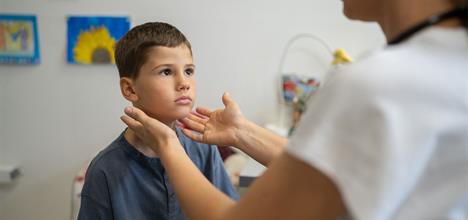
Bell’s palsy is a nerve condition that causes the muscles in the face to suddenly weaken. Almost all cases of Bell’s palsy affect only one side of the face, which may appear to droop.
Bell’s palsy can be troublesome for children and teenagers. The good news is that they usually make a full recovery. Read on to learn more.
What are the symptoms of Bell’s palsy?
Each side of the face has its own facial nerve that controls its muscles. When this nerve does not function properly, this is called a nerve “paresis” (paralysis).
With Bell’s palsy, facial weakness develops somewhat quickly – over 1 to 2 days. Shortly before the weakness starts, children may experience ear or jaw pain and painful sound sensitivity on the affected side.
On the side of the face affected by Bell’s palsy, children have problems:
Bell’s palsy can also cause children to have difficulty speaking, holding food or liquids in their mouths, or sucking on a straw. For some, sounds may seem louder in the ear on the side with the weakness. The sense of taste on their tongue may also seem diminished on that side.
Facial sensation should not be affected by Bell’s palsy, but sometimes children say their face feels “numb” or “weird. This is because they have trouble moving their face on that side.
What causes Bell’s palsy?
Bell’s palsy is “idiopathic,” meaning the exact cause is not known. But it is thought to happen when the immune system causes inflammation and swelling of the facial nerve, such as after a recent infection.
What else can cause facial muscle weakness?
About half of children who develop sudden weakness on one side of the face have Bell’s palsy. Sometimes facial nerve palsy has a specific cause, such as damage or spread of a nearby infection to the nerve. When this is the case, it is not called Bell’s palsy and is treated differently.
How is Bell’s palsy diagnosed?
In most cases of typical Bell’s palsy, no testing is needed. It can be diagnosed when a child has a sudden onset of weakness on one side of the face, affecting the upper and lower part of the face.
When testing may be necessary
If there is weakness or symptoms elsewhere in the body, then this is not Bell’s palsy. Weakness involving only the lower part of the face does not rule out Bell’s palsy, but testing may be needed to rule out other causes.
Children who have a weakened immune system, autoimmune disease, or who appear ill may also need testing. These tests may include, for example, an MRI or CT scan, spinal tap or blood tests.
Test for Lyme disease may be considered if you live in an area where Lyme disease is common – especially with rare cases of Bell’s palsy affecting both sides of the face. However, this test is not necessary in most routine cases.
How is Bell’s palsy treated?
Steroids
Steroid Medications are often prescribed for Bell’s palsy, especially when children are diagnosed within 3 days of facial weakness starting. It is not clear whether steroids are really necessary to treat Bell’s palsy in children. However, since they are useful in adult cases when started within 72 hours and are relatively safe when taken over a short period of time, most providers will recommend treatment.
Antiviral drugs
In patients with severe Bell’s palsy (for example, total paralysis of muscles on one side of the face), antiviral medication may also be prescribed. This is because there is a possible connection between them herpes simplex virus and Bell’s palsy. However, it is unclear whether this treatment increases the chance of full recovery from Bell’s palsy.
Other treatments for Bell’s palsy
There are other, supportive treatments for Bell’s palsy to help manage symptoms. These may include:
How long does it take to recover from Bell’s Palsy?
Almost all children with Bell’s palsy make a full recovery, even without treatment.
Typically, symptoms disappear within a few weeks or months, especially if the weakness was mild. In general, facial weakness from Bell’s palsy should not worsen after 3 weeks and should show signs of improvement after 6 months. About 85% of children with Bell’s palsy will have a complete recovery by 6 months and more than 90% by 12 months.
Although rare, some children may have severe facial weakness that does not fully recover. In these cases, further testing may be recommended. These may include an MRI of the brain and electrical tests of the nerves and muscles, called electromyography (EMG) and nerve conduction studies. If there is still significant weakness, there are surgical treatments to improve symptoms.
Emotional support for children with Bell’s palsy
Children with Bell’s palsy may need extra emotional support. Because facial weakness can make it harder to smile, eat, and speak, children and teens sometimes feel self-conscious and isolated. Some may experience bullying. Don’t hesitate to talk to your pediatrician and school for mental health help if needed.
More information
About Dr. Klotz
|
 Jenna Klotz, MD, MS, FAAPis a pediatric neurologist and neuromuscular specialist at Stanford Children’s Health/Lucile Packard Children’s Hospital and a clinical assistant professor of neurology at Stanford University School of Medicine. She is a member of the American Academy of Pediatrics (AAP) California Chapter 1 and the AAP Section on Neurology, External Affairs and Publications Subcommittee.
The information on this site should not be used as a substitute for medical care and advice from your pediatrician. There may be variations in treatment that your pediatrician may recommend based on individual facts and circumstances.