
Print version
Print version (Arabic)
Intermittent Exotropia One Sheet
(Adapted from educational materials provided by VCU Ophthalmology — Drs. Amanda Pfeifer & Evan Silverstein)
Intermittent Exotropia One Sheet (Spanish)
(Adapted from educational materials provided by VCU Ophthalmology — Drs. Amanda Pfeifer & Evan Silverstein)
WHAT IS EXOTROPIA?
Exotropia is when one or both eyes turn outward instead of looking straight. It is the opposite of crossed eyes, also called esotropia. Exotropia may occur from time to time (called intermittent exotropia) or it may be constant. People of all ages can have exotropia.
[See figures 1 and 2].
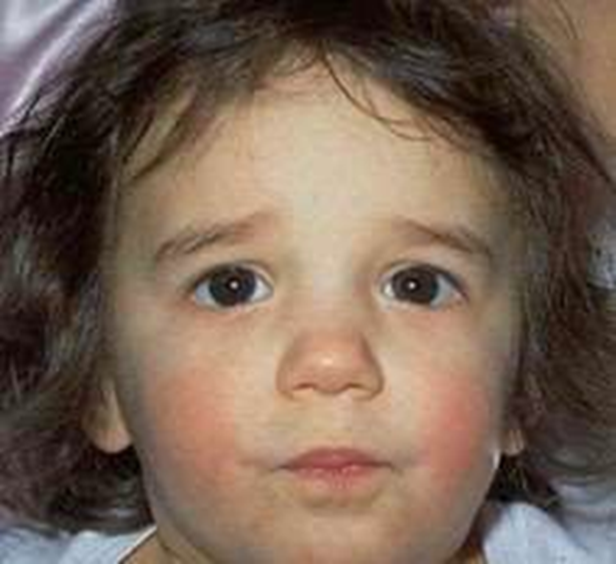
Fig. 1: Eyes fixed, straight.

Fig. 2: Right eye appeared, exotropic
WHAT ARE THE DIFFERENT TYPES OF EXOTROPIA?
Exotropia can be present at birth (called congenital exotropia) or develop later in life. The types of exotropia that develop later are intermittent exotropia, sensory exotropia, and consecutive exotropia (which happens after surgery to fix crossed eyes)
WHAT IS INVOLVED EXOTROPIA?
Congenital exotropia occurs when a baby’s eyes turn outward from birth or early childhood. Esotropia, or eyes that turn inward, is more common in babies. If a baby has persistent exotropia, a pediatric ophthalmologist should check for other health problems.
WHAT IS INTERMITTENT EXOTROPIA?
Intermittent exotropia is when one eye turns sometimes, but other times both eyes are straight. It can happen when the person is tired, ill or daydreaming. Sometimes it happens when the person looks at things far away. In some people, intermittent exotropia may become more frequent or even constant over time.
DOES EXOTROPIA RUN IN FAMILIES?
Strabismus, which is the medical term for eye misalignment, can run in families. But people in the same family may not have the same type or severity of strabismus. If someone in the family has exotropia or strabismus, a child should see a pediatric ophthalmologist.
WHAT ARE THE SIGNS OF INTERMITTENT EXOTROPIA?
People with intermittent exotropia may notice that their eyes drift outward, especially when they are tired, ill, bored, or after drinking alcohol. Children may squint one eye in bright sunlight or rub their eye when their eye drifts outward. Some people say that their vision becomes blurry or they see double when their eyes are not aligned. Some people may even “feel” that one eye is out of place, even if they see nothing unusual. Some people may not feel anything when their eye drifts and only know they have exotropia because other people notice their eye turning out.
WHY DOES SOMEONE WITH INTERMITTENT EXOTROPIA CLOSE ONE EYE OFTEN?
Children with intermittent exotropia sometimes squint or close one eye, especially in bright sunlight. The reason for this is not fully understood, but closing one eye can help them see better in the light. Sunglasses can sometimes help with squint. If a child doesn’t want to wear sunglasses, a hat with a shade, like a baseball cap, can help protect their eyes from the sun and reduce squint.
IS IT POSSIBLE TO WAKE UP FROM INTERMITTENT EXOTROPIA?
Exotropia may occur less frequently as a person ages, but most types do not disappear completely. Many people end up needing surgery to fix it. However, some people can learn to control their eye function with glasses or other treatments without surgery.
CAN SOMETHING BE DONE TO PREVENT INTERMITTENT EXOTROPIA FROM GETTING WORSE?
We cannot predict if or when intermittent exotropia will get worse.
Simple things like getting enough sleep and staying healthy can help control intermittent exotropia, as illness or fever can make it happen more often. It is also important to see the eye doctor regularly to make sure your vision is good and the glasses are correct. The eye doctor can tell you if there are other treatments that can help.
DOES WATCHING TOO MUCH TV OR PLAYING TOO MANY VIDEO GAMES MAKE EXOTROPIA WORSE? OR CAN VIDEO GAMES HELP?
Normal activities, such as reading or playing outside, do not affect exotropia. However, it is a good idea for parents to limit the time their children spend watching TV, playing video games or using computers for other health reasons. For more information, see our information on screen time.
WHAT IS SENSORY EXOTROPIA?
Sensory exotropia occurs when one eye has poor vision. The weaker eye may not work well with the other eye, so it may turn outward. This can happen at any age. If the vision problem is treatable, it should be treated early. If vision is permanently lost, surgery to correct the eye may be helpful.
HOW IS EXOTROPIA TREATED?
Exotropia can sometimes be treated without surgery. Glasses can help, and sometimes the stronger eye is used to patch. If the eyes are often misaligned, surgery may be necessary to fix the eyes. The pediatric ophthalmologist will tell you the best time for the surgery.
WHEN IS SURGERY FOR EXOTROPIA NECESSARY?
Surgery may be necessary if exotropia occurs a lot, if there are problems such as eye strain or double vision, or if the patient begins to lose “binocular vision” (the ability to use both eyes together). Surgery may not be necessary if glasses or other treatments work.
WHAT ARE BINOCULAR VISION?
Binocular vision means using both eyes together to see objects clearly. This helps with depth perception or “3-D vision.” Your pediatric ophthalmologist can test for this in the office.
WHAT AGE IS BEST FOR EXOTROPIA SURGERY?
Age is not the main reason for exotropia surgery. Surgery is considered when exotropia occurs most of the time, regardless of the patient’s age.
CAN EXOTROPIA BE TREATED WITH VICE?
For young children who prefer to use one eye most of the time, patching the stronger eye part time can help the weaker eye see better. Some doctors may suggest patching the eyes on alternate days to help the eyes work better together.
CAN EXOTROPIA BE TREATED WITH GLASSES?
It depends on the prescription of the glasses. If someone is nearsighted or has a lot of astigmatism, wearing the right glasses can help keep the eyes straight and working together.
CAN EXOTROPIA BE TREATED WITH PRIMS IN THE BEETLES?
If the exotropia is mild or small, prisms in glasses can help with double vision, especially in adults. But prisms do not solve the eye movement problem.
WHAT ABOUT EXERCISES OR VISION THERAPY FOR EYES?
Exercises have only been shown to work with convergence insufficiency, a specific eye movement problem that occurs when focusing on things up close. These exercises can be done at home. If the pediatric ophthalmologist recommends this, they can show you how to do the exercises. Some people suggest exercises for other types of exotropia, but there is no evidence that they help with intermittent exotropia.
Updated: 12/2024