
Share this page:
 If you suffer from hay fever (allergic rhinitis) caused by pollen, your mouth or throat may become itchy after eating an apple or celery. This occurs in up to 50 to 75% of adults who are allergic to birch pollen. This reaction occurs because the proteins found in some fruits and vegetables are very similar to those found in pollen. These proteins can confuse the immune system and cause an allergic reaction or make existing symptoms worse, which is referred to as cross-reactivity. In the case of pollen and food, the result of cross-reactivity is called Oral Allergy Syndrome (OAS), also known as Pollen Food Allergy Syndrome (PFAS).
OAS is a type of contact allergic reaction that occurs when the mouth and throat come into contact with raw fruits or vegetables. The most common symptoms of OAS include itching or swelling of the mouth, face, lip, tongue and throat. Symptoms usually appear immediately after eating raw fruit or vegetables, although in rare cases the reaction can occur more than an hour later. OAS is generally considered to be a mild form of food allergy. Rarely, OAS can cause severe swelling of the throat that leads to difficulty swallowing or breathing. In someone who is highly allergic, a systemic reaction called anaphylaxis (an-a-fi-LAK-sis) can be caused by a pollen cross-reactive raw fruit or vegetable, but this is very uncommon. OAS can occur at any time of the year.
Although there is no definitive test for OAS, affected individuals often have a positive allergy skin test or blood test for specific pollen, along with a history of symptoms after consuming the suspect foods.
Different reactions based on different allergies
Some people report symptoms with just one food and others with many different fruits and vegetables. Some people report that only certain varieties of the fruit cause symptoms, for example specific apple varieties.
In the case of OAS, individuals react to different foods based on the type of seasonal allergies they are affected by. For example, if you are allergic to birch pollen, a primary airborne allergen responsible for symptoms in the spring, you may have reactions triggered by stoned fruit or carrots. Even peanuts, almonds and hazelnuts can cause an itchy mouth in those with birch pollen allergies. If mouth itching is seen with nuts, you should see an allergist/immunologist because mild mouth symptoms may signal a more severe allergic reaction to nuts. People with grass allergies may have a reaction to peaches, celery, tomatoes, melons (cantaloupe, watermelon and honeydew) and oranges. Those with reactions to ragweed may have symptoms when they eat foods such as banana, cucumber, melon and zucchini. This handy table shows the possible cross-reactions with pollen and plant food.
Managing your symptoms
If you have symptoms of OAS, you should avoid eating these ingredients, especially during allergy season, because in many patients OAS worsens during the pollen season of that particular pollen. One way to reduce cross-reactions with food is to bake or microwave the food, because high temperatures break down the proteins responsible for OAS. Eating canned food can also limit the reaction. And it can be useful to peel the food before eating, as the harmful protein is often concentrated in the skin.
Some studies have shown that treatment with allergy shots can improve the symptoms of OAS.
You should talk to your doctor if:
• Your OAS symptoms cause significant throat discomfort;
• Your OAS symptoms get progressively worse;
• Your OAS symptoms are caused by cooked fruits and vegetables;
• Your OAS symptoms are caused by nuts;
• You develop systemic reactions after eating raw fruits or vegetables, such as hives, vomiting or difficulty breathing.
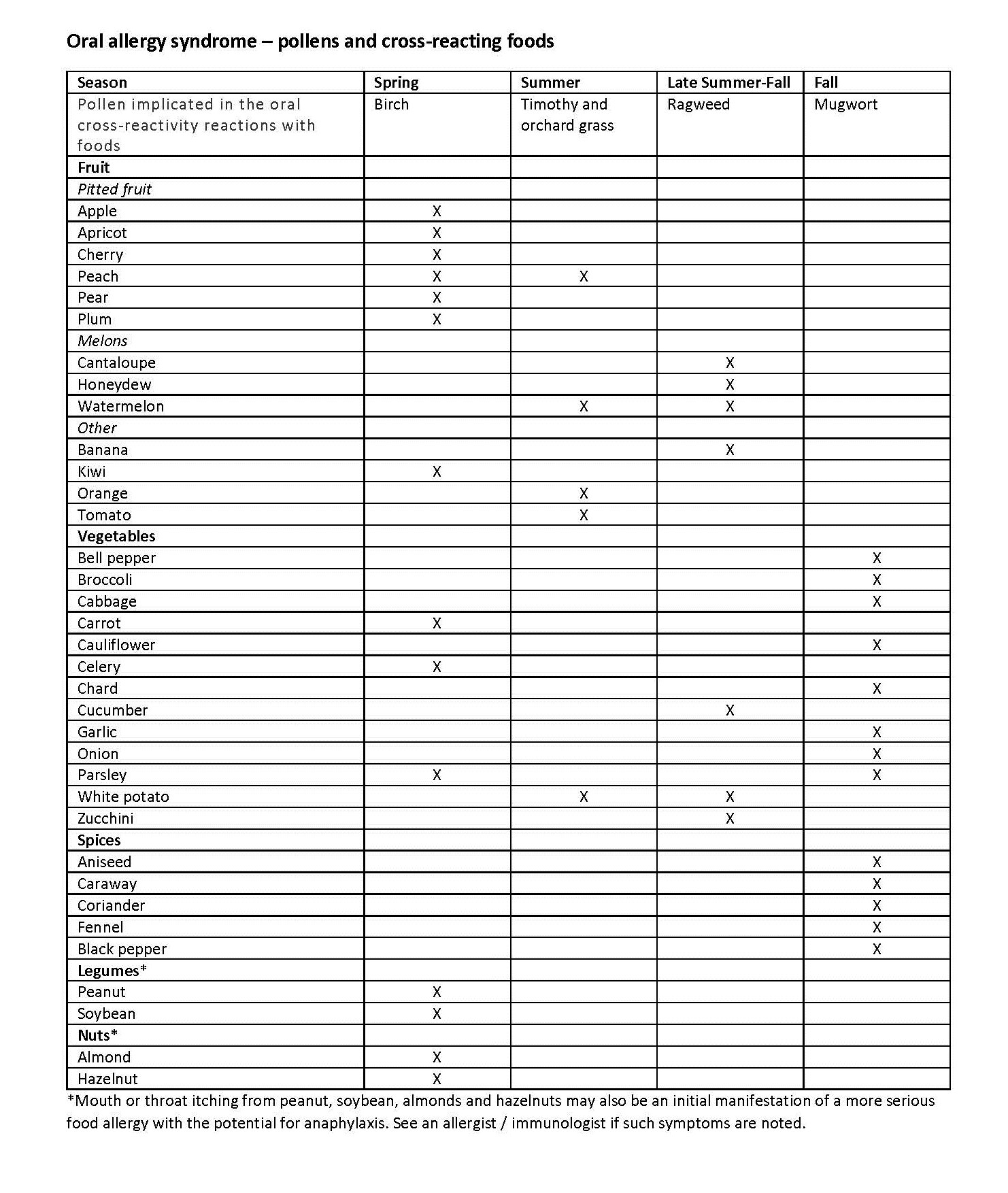
Please note that this list is not exhaustive.
Click here for a PDF version of the chart.
Learn more about allergic rhinitis or hay fever.
The AAAAIs Find an allergist/immunologist service is a reliable resource to help you find a specialist close to home.
1/10/2024
Share this page: