17 June 2025
A look
- Researchers identified compounds that could kill malaria parasites inside mosquitoes.
- Incorporating these compounds into bed nets can prevent malaria transmission by mosquitoes that are resistant to insecticides.
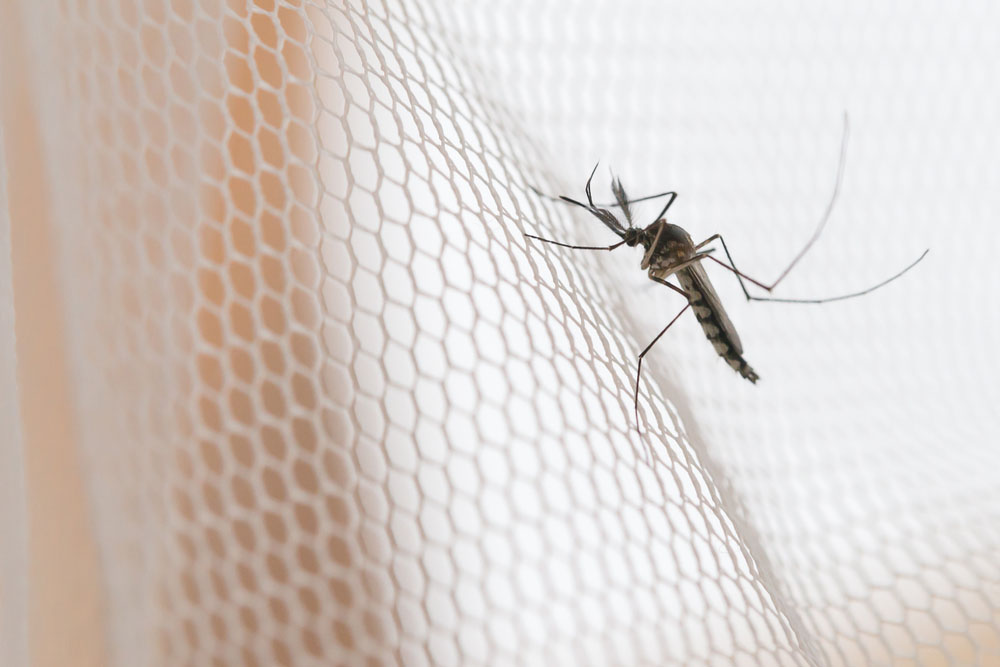
Researchers are working to develop compounds that would be effective in preventing malaria when incorporated into bed nets.
GrooveZ/Shutterstock
Malaria deaths declined significantly in the early 21st century. Insecticide-treated bed nets played a major role in killing the mosquitoes that spread malaria. But this decline has stalled in recent years due to the growing resistance of mosquitoes to insecticides used in bed nets.
An alternative control strategy would be to kill the malaria parasite, Plasmodium falciparuminside mosquitoes before they can infect humans. This involves using bed nets that contain antimalarials. A research team led by Dr. Dyann Wirth and Flaminia Catteruccia at the Harvard School of Public Health sought to find drugs that could work for such an approach. The results of their study, which was funded in part by the NIH, appeared in Nature on 21 May 2025.
The team screened 81 antimalarial drugs by topically applying each to live mosquitoes. Once treated, the mosquitoes were allowed to feed Plasmodium– infected blood. 22 of the substances significantly reduced the chances of the mosquitoes becoming infected. Two of the most effective drugs belonged to a class called endokine-like quinolones (ELQs). These kill malaria parasites by blocking energy production in the mitochondria.
For a drug to work in the bed net, it must be effective via contact with only the legs of the mosquito, the parts of the insect that come into contact with the bed net. But when tested, most of the drugs that worked in the initial screen did not work via contact with the legs alone. So the researchers synthesized different ELQs to find the ones that would work most effectively via contact with the legs. Two of these, ELQ-453 and ELQ-613, completely or almost completely prevented infection in mosquitoes when administered in this way. Each targeted a different site on the same parasite molecule—an advantage in preventing parasites from developing resistance.
The team then incorporated ELQ-453 and ELQ-613 into polyethylene films similar to the material used in bed nets. Contact with these films was enough to prevent infection in mosquitoes for up to two days. Even four days after contact with the films, the chance and intensity of infection was significantly reduced. The films were still effective when tested a year later and worked on insecticide-resistant mosquitoes.
In laboratory studies, no parasites were able to develop resistance to either drug. Those who had resistance to one of the drugs also had severely impaired development within mosquitoes. This will reduce the risk of transmission to humans.
These findings suggest that killing malaria parasites inside mosquitoes may be a promising approach to control malaria transmission to humans.
“We desperately need innovation in malaria control,” says Catteruccia. “This study offers a new, effective way to stop the transmission of malaria parasites, which we hope will reduce the burden of this devastating disease in Africa and beyond.”
However, much more work will be needed to develop and test the effect of this potential new tool on malaria transmission and disease incidence under real-world conditions.
—by Brian Doctrow, Ph.D.
Related links
References
In vivo screening of Plasmodium targets for mosquito-based malaria control. Probst AS, Paton DG, Appetecchia F, Bopp S, Adams KL, Rinvee TA, Pou S, Winter R, Du EW, Yahiya S, Vidoudez C, Singh N, Rodrigues J, Castañeda-Casado P, Tammaro C, Chen D, Godinez-Macias J. EA, Baum J, Burrows JN, Riscoe MK, Wirth DF, Catteruccia F. Nature. 2025 May 21. doi: 10.1038/s41586-025-09039-2. Online before print. PMID: 40399670.
Financing
NIH’s National Institute of Allergy and Infectious Diseases (NIAID); Howard Hughes Medical Institute; Open Philanthropy and Good Ventures; Fujifilm Fellowship Program; UK Research and Innovation Biotechnology and Biological Sciences Research Council; United States Department of Veterans Affairs; United States Department of Defense.