Vaping is also bad for you. E-cigarettes are often marketed as better than tobacco, but they contain harmful chemicals and also create air pollution. Vaping emissions can have adverse effects, especially in infants, children, pregnant women and people with lung conditions such as asthma.
What is in tobacco smoke and e-cigarette aerosol?
Tobacco smoke has more than 7,000 chemicals.1 This includes trace amounts of toxins such as formaldehyde, arsenic, DDT and cyanide. At least 70 of the substances in tobacco smoke can cause cancer.2 Many more irritate the lungs and airways.
E-cigarettes are sometimes called e-cigs, electronic nicotine delivery systems (ENDS), vape pens, or vapes. They work by heating liquid contained in cartridges. This creates a mist or aerosol that is breathed into the lungs. The act of inhaling and exhaling the e-cigarette aerosol is known as vaping.
E-cigarette aerosol often contains nicotine and other toxic chemicals.3 This can cause serious health conditions, such as lung disease, heart disease and cancer. The aerosols create air pollution that is a health risk for users and non-users around them.
Harmful substances found in e-cigarettes include:3
- Nicotine
- Carcinogenic chemicals (carcinogens)
- Very fine particles that can be breathed into the lungs
- Volatile organic compounds (gases released into the air from products)
- Chemical aroma associated with severe lung disease
- Heavy metals, such as nickel, tin and lead
It is difficult to know exactly what is in e-cigarettes. For example, some products that claim to have no nicotine have been found to contain nicotine.
How is passive smoke linked to asthma and allergies?
Environmental tobacco smoke (ETS) is also called “passive smoking”. This refers to the smoke released into the air when a smoker exhales. It also refers to the smoke released from a burning cigarette, cigar or pipe.
Passive smoking is harmful. A person who is around someone who smokes is also exposed to the same harmful chemicals in the smoke. Passive smoking can trigger asthma attacks or make asthma worse. It can also cause heart disease, stroke and lung cancer.
Children are at high risk of lung damage and disease from inhaling smoke. Studies have shown a clear link between passive smoking and asthma in children. But studies have not proven that passive smoking reasons asthma in children.
Passive smoking can cause serious health problems in children.
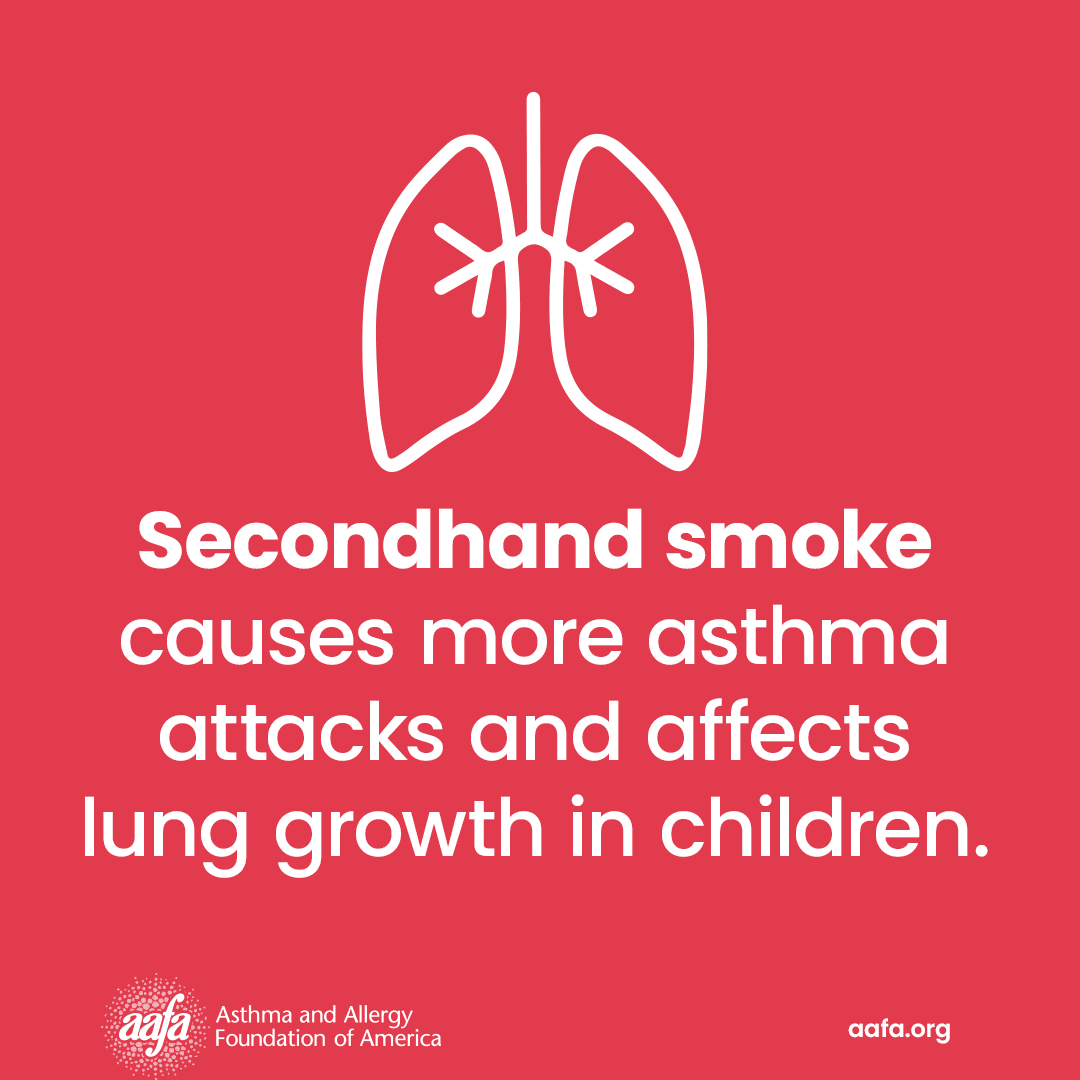
- Passive smoking can trigger asthma attacks in children who have asthma. Children with asthma who are around secondhand smoke have worse and more frequent asthma attacks.1
- Studies show that children whose parents smoke have a greater chance of getting sick more often. Their lungs may grow smaller than children who do not inhale secondhand smoke. They also have a higher risk of more bronchitis and pneumonia.1
- Wheezing and coughing are more common in children who breathe secondhand smoke.4
- Children whose parents smoke around them get more ear infections. They often have fluid in their ears. They also have several surgeries for ear tubes for drainage.4
How is used e-cigarette aerosol linked to asthma?
Studies have shown that used e-cigarette aerosol can worsen existing asthma and cause asthma flare-ups, especially in young people.5 Exposure to used e-cigarette aerosol can cause the following respiratory symptoms:
- Hissing
- Shortness of breath
- Cough
- Increased or thickened mucus
Secondhand vape is e-cigarette aerosol inhaled by someone who does not vape. Experts are still learning about secondhand vape. But they know it’s harmful. It can cause some of the same health problems as vaping.
What is third hand smoke?
Third-hand smoke is residue from tobacco smoke. When a cigarette is smoked, chemicals in the smoke stick to surfaces and dust for months after the smoke is gone. The chemicals in the residue then react with other pollutants in the air, such as ozone, to create harmful particles that you can easily breathe into your airways.6
Third-hand smoke particles are extremely small and easily enter your lungs. These particles can stick to skin and clothing. Adults and children then inhale the residue or absorb it through their skin or mouth.
Babies and young children can ingest these toxic particles because they often put their hands in their mouths. They are more likely to touch a surface and then eat without washing their hands. Children can also absorb these chemicals through their skin. For example, if a child is put in a car seat wearing only a diaper and people smoke in the car – even when the child is not present – then the car seat may be coated with these chemicals.
Some experts believe that third-hand smoke may be worse for people with asthma than nicotine.
Smoking outdoors does not reduce the threat of secondhand smoke because it can cling to a person’s clothing. Ventilating rooms or cars does not help. Opening windows, fans, air filters or restricting smoking to certain rooms or outside will also not reduce thirdhand smoke.
What is third-hand e-cigarette aerosol?
Researchers are still learning about third-hand e-cigarette aerosol. But they know well that the substances found in the e-cigarette aerosol can stick to surfaces.6 This is known as third-hand vape or third-hand e-cigarette aerosol.
Some studies have shown that the nicotine found in e-cigarette aerosol can land on tables, walls, floors and windows.6 It can then enter people’s bodies if they touch it, swallow it or inhale it. Infants and young children are most at risk of being exposed to third-hand vapour. This is because many children touch many surfaces and put objects in their mouths. It can also be difficult to remove nicotine from surfaces because it is very difficult to clean with ordinary soap. It must be removed with an acidic cleaner.6
What is the connection between smoke, e-cigarette aerosol and teenagers?
Teenage smoking has always been a concern. Most people who smoke start smoking when they are 18 years old.7 Although only 13 out of 100 high school students say they currently smoke cigarettes (traditional or electronic), 28 out of 100 have tried a tobacco product.8
Vaping is becoming more popular among teenagers. The CDC’s 2023 youth data show that nearly 1 in 20 middle school students and about 1 in 10 high school students reported using e-cigarettes in the past 30 days.7 This means that the number of students who use e-cigarettes nearly doubles between middle school and high school.
E-cigarettes could be popular among this age group because the liquid found in e-cigarette cartridges often comes in flavors that appeal to young people. The CDC’s 2023 youth data show that nearly all high school students (90.3%) and middle school students (87.1%) who used e-cigarettes in the past 30 days said they used a flavored e-cigarette during that time.7
Flavored cartridges have been banned by the Food and Drug Administration (FDA). But these cartridges are still easy to buy due to an influx of imported flavorings, making the ban more difficult to enforce.
Many communities and local governments are trying to control tobacco advertising aimed at teenagers. The increase in vaping is worrying because e-cigarettes can have harmful substances that put teenagers at risk of disease. A recent study from Texas A&M University found that vaping is associated with cigarette smoking, depression, behaviors related to substance abuse (drugs and alcohol), and increased risk of asthma in teenagers.8
Where can I get help to quit smoking or vaping?
People have different motivations to quit smoking or vaping. For some, they want to improve their health. For others, they want to protect their loved ones from the effects of secondhand or thirdhand smoke. Some people have ethical concerns about how the materials used to create e-cigarettes/vapes are sourced. (Electronic items with lithium-ion batteries are linked to mining with severe human rights abuses.) Disposable cartridges also contribute to plastic pollution.
It is important to have support to help you quit. Signs of nicotine addiction may include:
- Desire for nicotine
- Unable to stop smoking or vaping
- Develop a tolerance (need to use more to feel the same effects)
Free help and resources are available by phone, online, or mail from the CDC. Call 1-800-QUIT-NOW (1-800-784-8669). Callers are redirected to their state termination lines, which offer several types of information and services. These may include:
- Free support, advice and consulting from experienced coaches
- A personal disconnection plan
- Practical information on how to quit, including ways to cope with nicotine withdrawal
- The latest information on smoking cessation
- Free or discounted medicine (available to some callers in most states)
- References to other resources
- Sent self-help material
If you prefer online help, visit smokefree.gov. You will find online resources such as:
- Live online chat
- Building a termination plan
- SmokefreeTXT
- Exit the START app
- Links to Smokefree Espaňol, Smokefree Teen, Smokefree Women, SmokefreeVET and Smokefree60+
How can I reduce my family’s exposure to secondhand and thirdhand smoke and e-cigarette aerosol?
As a parent or caregiver, you can limit your family’s exposure to tobacco smoke and e-cigarette aerosol.
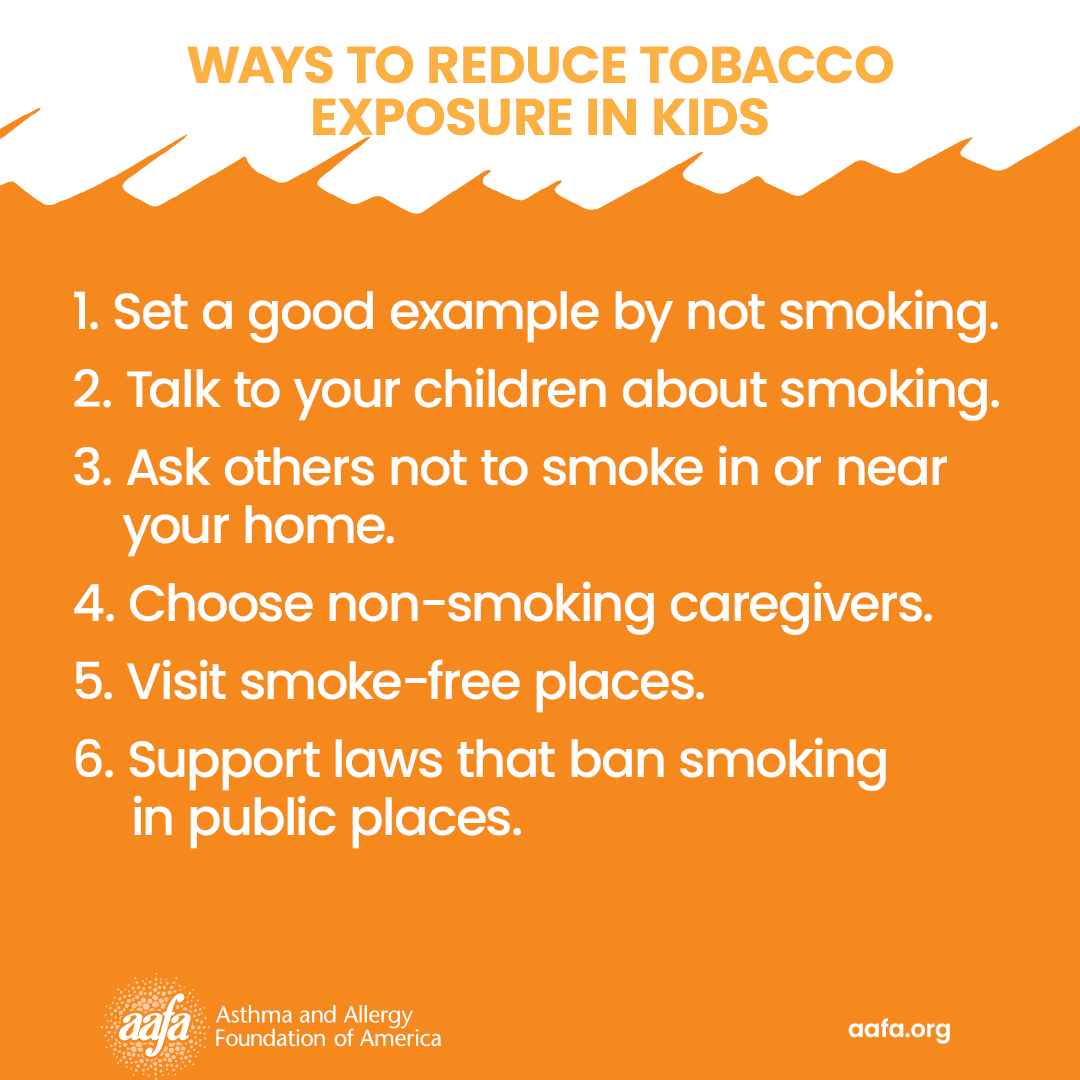
- If you smoke or vape, do your best to quit. Resources and groups above are available to help you.
- Talk to your children about the dangers of smoking and vaping and how it affects asthma.
- Ask other people not to smoke or vape in or near your home and car.
- Visit smoke-free and vapor-free homes and businesses with a no-smoking/no-vaping policy.
- Choose childcare that does not expose your child to passive and third-hand smoke or vape. Even if a caregiver does not smoke or vape around a child, they can still expose a child to secondhand smoke and vapor on their clothing or skin. Remember that children exposed to cigarette and e-cigarette aerosol and residue can get sick more often. Protecting them from exposure is good preventative medicine. Your child’s health depends on it.