
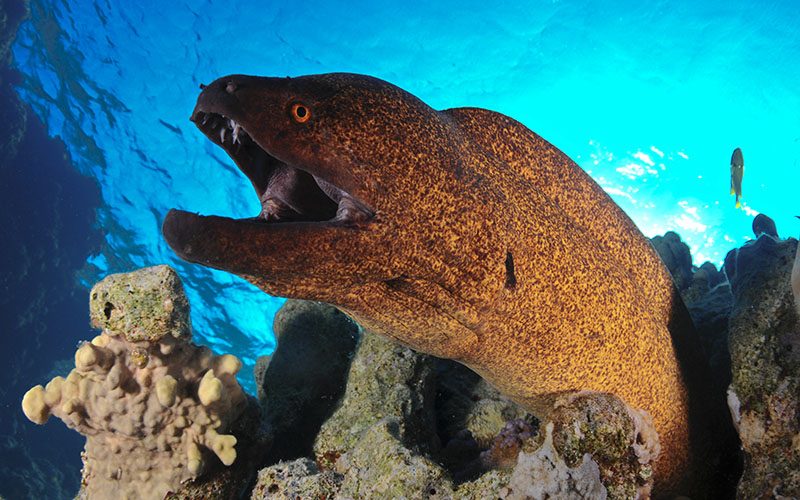
As neat as it is to experience marine life in their natural habitats, some creatures do not appreciate our presence in their domain and may respond with an unwelcome bite or sting. Specific bites are a rare occurrence that most divers fortunately do not have to deal with.
But incidents and accidents do happen, and like so many things in diving, it’s down to education and preparedness to help avoid these situations and respond properly when they do.
What bites?
Where you dive affects what nibblers you may encounter, but common sea bites include morays, triggerfish, barracudas and some species of sharks. The severity of the injury varies: while some animals deliver harmless nips, others can inflict a very destructive and/or painful bite, and still other bites may contain toxins or carry a risk of infection.
Moray eels are the largest species of eel and are known to produce toxins which can be found in their mouths. Temporary paralysis of the bitten area may occur. Eels have an impressive mouthful of fangs, and their bites can be incredibly painful due to the “retraction pattern” in which their teeth are arranged. If not cared for quickly and properly, these bites can easily become infected.
Not all sharks are known to bite humans: shark species that can bite include white sharks, tiger sharks, and bull sharks. But shark encounters are a bucket list item for many divers—and they can be done safely with a few precautions. Follow your guide’s instructions and stay with your group (if applicable). And whether your encounter was planned or not, move slowly, stay calm, avoid dangling, shiny objects, and never approach or chase a shark. If you are hunting, be sure to learn the proper procedures to do so safely. Sharks often feed early in the morning or at dusk – you can limit your risk by avoiding these times of day.
Triggerfish are known to be extremely aggressive during mating season and have surprisingly powerful bites. If a diver gets too close to their nests, they will try to chase the diver away.
With their fangs, many divers enjoy seeing barracuda up close, and these impressive fish are known to make photogenic models. Although somewhat aggressive and high on the food chain, attacks on humans are rare.
Sea bites are rare and generally not life-threatening. They often occur when the animal feels threatened and retaliates to protect itself or its territory. Refraining from handling or harassing animals underwater goes a long way in avoiding being bitten.
Treatment options
Treatment for marine bites varies based on the animal that inflicted the bite, but there are a few general rules:
- Protect yourself by wearing gloves (and other personal protective equipment as needed) when administering the treatment
- Control bleeding with direct pressure
- If the bleeding is severe and cannot be controlled, use a tourniquet
- Rinse the wound with clean water
- Do not administer any medication unless directed by a physician
Remember that all bites have a high potential for infection and should be evaluated by a doctor. The doctor may prescribe antibiotics to fight infection or painkillers to relieve pain.
Bite Stuff
When diving, remember that you are a visitor and that it is only natural for marine animals to defend their home. The best defense is to be aware of your surroundings and ensure that the animals have their place – never approach and never touch. Be especially careful where you put your hands, as something may be lurking in a rock or crevice. Gloves, wetsuits and other equipment naturally act as a defense against bites and will give your skin some protection.
Diving provides unparalleled exposure to marine animals and environments many people don’t get to see in their lifetime. With the right precautions, you can thoroughly and safely enjoy what the underwater world has to offer.